

Good morning, and happy Sunday.
Congress’s so-called “Crypto Week” is over, but the resulting wave of optimism in the crypto industry has just begun. The sector’s market value reached a record $4 trillion on Friday, a day after lawmakers sent a bill to create a regulatory framework for US dollar-pegged stablecoins to President Donald Trump’s desk.
Today, we talk to an expert about how new US economic policies, including the stablecoin-focused GENIUS Act, could impact Europe.
But first, a word from our sponsor, Oracle NetSuite.
Business school costs $200,000 and pins you down for two years. Most executives aren’t up for this much expense and disruption, but they still need to hone the MBA mindset that makes real leaders stand out.
Jack McCullough, founder and President of the CFO Leadership Council, has the solution. His new report, “MBA for Lunch,” distills the sharpest insights from top MBA programs into strategies you can absorb between meetings. No case studies about companies that no longer exist. No theoretical frameworks that collapse in practice.
You’ll get tools built for today’s challenges, such as:
- Leading through AI adoption.
- Applying data-driven decision models.
- Evolving the CFO role beyond traditional reporting.
McCullough focuses on what actually works for executives managing transformation, stakeholder trust and innovation.
Whether you’re commuting, traveling or stealing 20 minutes between calls, this is executive education that fits your schedule — and delivers value fast.
EUnomics in the Age of Trump: Defense and Crypto Edition
“Living next to you is in some ways like sleeping with an elephant,” Pierre Trudeau, the late Canadian prime minister, told a Washington, D.C., audience in 1969. “No matter how friendly and even-tempered is the beast, if I can call it that, one is affected by every twitch and grunt.”
已故加拿大總理皮耶·杜魯道1969年對華盛頓聽眾說:「住在你們隔壁就像睡在大象旁,無論野獸多麼友善溫和,每一次顫動和咕噥都會影響你。」
More than 50 years later, those words still ring true far beyond Canada. In just six months, President Trump’s second administration has pursued a dramatic overhaul of economic policies with seismic implications both in the US, the world’s biggest market, and for the nation’s trading partners and competitors abroad. Take, for example, the European Union.
五十多年後,這番話在加拿大以外依然適用。川普總統第二任期推動經濟政策大改革,對美國及其貿易夥伴如歐盟影響重大。
Under pressure from Trump’s administration, members of the NATO defense alliance, 23 of whose 32 members are EU countries, agreed last month to spend the equivalent of 5% of their national GDP on defense by 2035, up from the current 2% target.
在川普政府施壓下,北約成員國上月同意將國防支出提高到 GDP 的 5%,從當前的 2%目標提升。
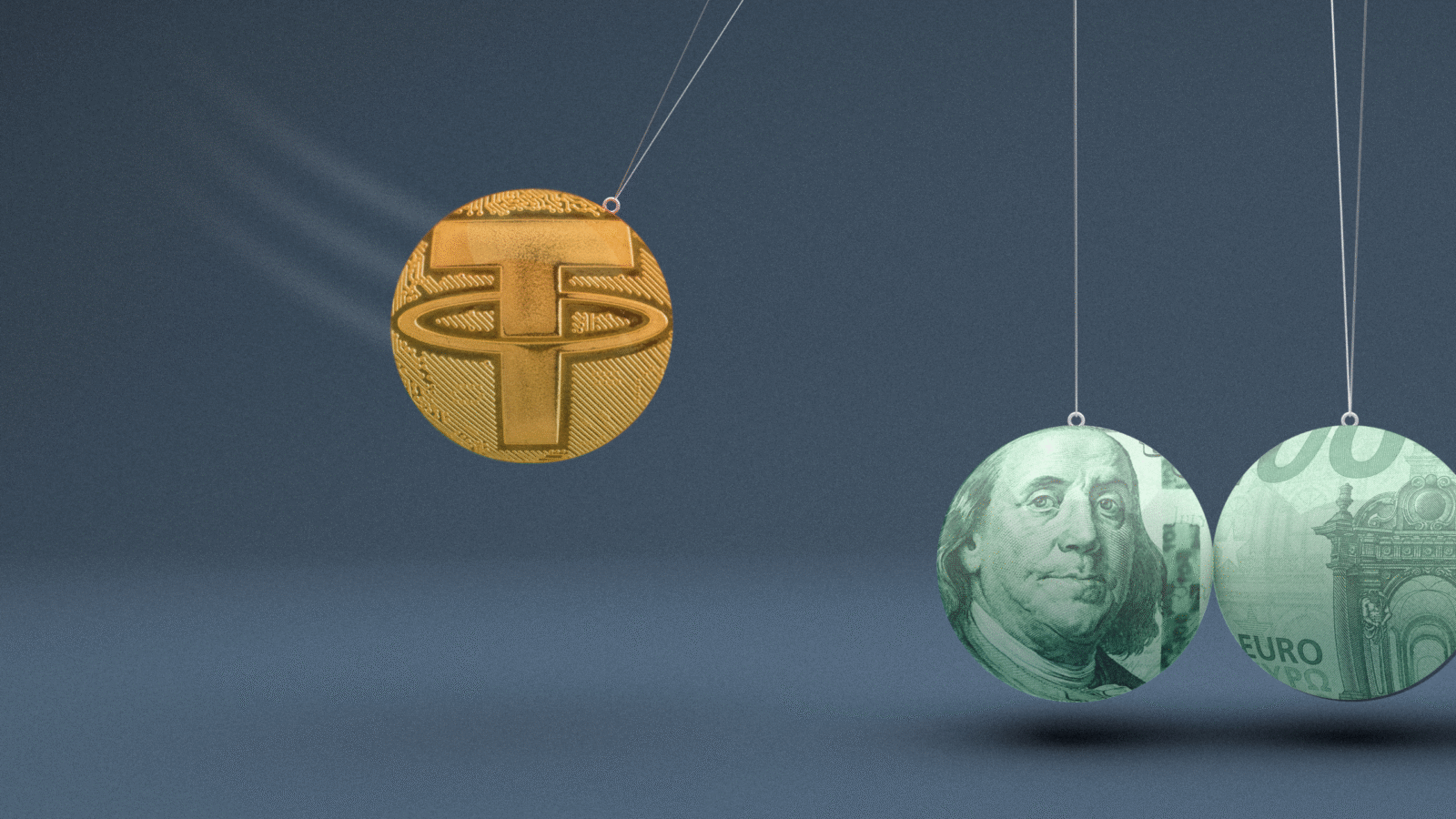
And on Thursday, US lawmakers passed the GENIUS Act, the first major national crypto legislation, establishing a regulatory framework for stablecoins two years after the EU enacted its own legislation.
週四,美國立法者通過了 GENIUS 法案,這是首個國家級加密貨幣法規,為穩定幣建立監管框架,比歐盟晚兩年。
Few people have an inside understanding of one of these two macroeconomic changes: Berlin-based economist Jan Philipp Fritsche has a window into both. A former European Central Bank researcher who served on a panel supporting the European Parliament’s Committee on Economic and Monetary Affairs during the COVID pandemic, he is now the managing director at Oak Security, a leading cybersecurity firm that audits blockchains.
少有專家能深入理解這兩種宏觀經濟變化:柏林經濟學家 Jan Philipp Fritsche 卻能洞察兩者。曾任歐洲央行研究員,在疫情期間擔任歐洲議會經濟貨幣事務委員會顧問小組成員,現為審計區塊鏈的頂尖資安公司 Oak Security 董事總經理。
That unique career trajectory is afforded by the fact that he’s the rare economist who can audit code. “I specialize in teaching computers to run complex models quickly and analyze large datasets to drive decision-making,” he explains, something that’s allowed him to “contribute directly to audits, spotting vulnerabilities and flaws through an economist’s lens – a perspective too rarely applied to cybersecurity.”
這種獨特職涯源於他是少數能審計程式碼的經濟學家。他解釋:「我專長於教電腦快速執行複雜模型並分析大數據以輔助決策」,讓他能「以經濟學視角直接參與審計,找出資安漏洞——這在該領域罕見。」
He spoke to The Daily Upside at the Web3 Summit in the German capital on Friday about macroeconomic policymaking in the EU in the wake of the NATO pledge and what America’s new stablecoin law means for the Old Continent.
上週五在柏林 Web3 峰會上,他與 The Daily Upside 談論北約承諾後的歐盟宏觀經濟政策,以及美國新穩定幣法對歐洲的意義。
NATO’s Big Spend
The Daily Upside: In 2021, you published research on government spending in uncertain times: specifically, the impact of government spending shocks in the US. The headline takeaway was that fiscal policy, or the use of government spending to influence the economy, works. Positive government spending shocks prompt significant increases in output and private consumption. Why does this surprise people?
The Daily Upside:2021 年,您發表關於不確定時期政府支出的研究:特別是美國政府支出衝擊的影響。關鍵結論是財政政策有效,正面支出促進產出和私人消費增長。為何這令人驚訝?
Jan Philipp Fritsche: There are a lot of reasons why people might be skeptical. The common argument goes like this: Governments take money away from individuals, hand it to bureaucrats who often lack market discipline, and then waste it on inefficient or even ridiculous projects. From that perspective, it’s easy to see why people doubt whether government spending can actually stimulate the economy.
Jan Philipp Fritsche: 人們懷疑有許多原因。常見論點是:政府從個人拿走錢,交給缺乏市場紀律的官僚,浪費在無效項目上,因此懷疑支出能否刺激經濟。
But there’s a counterpoint that’s often overlooked. In the US, the government has access to extremely cheap funding and resources far beyond any private actor. That allows it to solve coordination problems that individuals or firms can’t. During a recession, private actors are often paralyzed by uncertainty — nobody wants to invest or spend because everyone’s waiting for someone else to move first. The government, however, doesn’t need to be anxious; it can step in decisively. By directing resources and creating demand, the state can effectively restart economic activity and help pull a country out of recession.
<strong id=0>Jan Philipp Fritsche:</strong> 但常被忽視的是:美國政府能取得極低廉資金,解決私人無法應對的協調問題。衰退期間,私人因不確定性而癱瘓——無人願投資或支出。政府能果斷介入,引導資源創造需求,重啟經濟活動助脫離衰退。
TDU: You also figured out that there’s one area where state spending doesn’t do much good from an economic perspective.
TDU: 您也發現從經濟角度看,國家支出有一個領域效果不佳。
JPF: We figured out that an important thing to highlight is military spending. Because all the research papers that find the state is really inefficient, they look at military spending. And we also found that military spending was the least effective government spending within our research.
JPF: 我們發現軍事支出是效果最差的政府支出。因為所有認為國家效率低的研究都聚焦於此。
TDU: Why is that?
JPF: You’re not building infrastructure that can be used for other production. Military equipment or technology can’t be used as productively. When you invest in infrastructure like power plants, supercomputers, or even trucks, those assets have a productive value and can later be repurposed or sold — they also have multi-use value. By contrast, military equipment is highly specialized. It depreciates quickly, and if it’s called into action, it can literally detonate.
JPF: 軍事設備無法用於其他生產,不像電廠或卡車等資產具生產價值且可再利用。軍事設備高度專業化,貶值快,若投入行動可能直接引爆。
There are valid geopolitical and security considerations for military spending, but those were beyond the scope of our analysis. Our findings focus purely on economic impact.
<strong id=0>JPF:</strong> 軍事支出有合理的地緣政治考量,但我們分析只關注經濟影響。
TDU: It’s worth noting, then, that the NATO agreement to spend 5% of GDP on defense, up from 2%, means potentially spending hundreds of billions more on what you’ve found is economically inefficient.
TDU: 因此,北約協議將國防支出從 GDP 的 2%提高到 5%,意味著可能在您認為經濟無效的領域多花數千億美元。
JPF: From a purely economic perspective, it’s likely a bad investment. What that means is we likely have to do even more investment elsewhere to counteract that. It could be more infrastructure spending, and there can be synergies between military spending and other infrastructure spending. No-brainers, I think, for Europe are education and medical infrastructure. Those are areas where Europe has always excelled, and we could double down on that.
JPF: 從純經濟角度看,這是壞投資。我們須在其他地方如基礎建設增加支出以抵銷。我認為歐洲的顯見選擇是教育和醫療基建——該區域擅長的領域,我們可加倍投入。
The GENIUS Effect
TDU: The GENIUS Act, America’s first major national crypto legislation, sets up a regulatory regime for stablecoins. Europe has its own legislation, the 2023 Markets in Crypto-Assets Regulation (MiCA), which you’ve been critical of. Where does the passage of the GENIUS Act leave Europe in relation to the US?
美國首部重要加密貨幣法案《GENIUS 法案》確立穩定幣監管架構。歐洲雖有 2023 年《加密資產市場監管法》(MiCA),但你曾提出批評。GENIUS 法案通過後,歐洲對美國的監管立場將如何調整?
JPF: It’s a very clear signal that Europe needs to act now. I’ve criticized MiCA, which is not a great piece of legislation, for a while because it increases the too-big-to-fail risk for banks and it makes European-regulated stablecoins less competitive. The US now has the capacity to fund its budget with stablecoins, whereas Europe is behind.
JPF: 明確信號:歐洲必須立即行動。我長期批評 MiCA 法規增加銀行'太大不能倒'風險,並削弱歐洲穩定幣競爭力。美國現能用穩定幣資助預算;歐洲落後。
TDU: Can you explain this to an American audience, who may not be familiar with how MiCA increases the risk for banks?
向美國觀眾解釋:MiCA 如何增加銀行風險?
JPF: When you put fiat money into a stablecoin, the stablecoin has to do something with it. In the US, stablecoins do not need to deposit their funds with banks. They can invest their money in highly liquid assets, such as money market funds and treasuries. At the same time, money market funds have direct access to the central bank.
JPF: 當法幣存入穩定幣時,這些資金需被運用。美國允許穩定幣將資金投入高流動性資產(如貨幣市場基金與公債),而非僅存放銀行,且貨幣市場基金可直接對接央行。
In Europe, however, the regulatory technical standards of MiCA basically require that up to 60% of a stablecoin’s funds be deposited with EU banks. So what does that mean? That means that 60% of the stablecoins could be at risk if a set of banks go bankrupt. And, to make this more explicit, this isn’t a theoretical case. We saw this happen when Silicon Valley Bank went bankrupt and Circle’s USDC broke its dollar peg because it had a $3.3 billion exposure.
歐洲 MiCA 法規則要求穩定幣高達 60%資金須存放歐盟銀行。此舉意味若銀行倒閉,60%穩定幣資產將面臨風險。實例證明:矽谷銀行倒閉時,因 Circle 持有 33 億美元曝險,導致 USDC 脫離美元掛鉤。
And an important point of clarification: If you deposit money with a bank, like for a consumer, that’s insured by federal deposit insurance. But with a stablecoin, because the amounts being dealt in are so large, it’s not covered by federal deposit insurance. That’s why corporations have historically always relied on money market funds instead of banks.
關鍵釐清:個人銀行存款受聯邦存款保險保障,但穩定幣因交易規模龐大無法適用此保險。此為企業歷來偏好貨幣市場基金而非銀行的主因。
You and fellow economist Jón Egilsson, the former chair of the Icelandic Central Bank’s supervisory board, have discussed this year how GENIUS offers potential support for dollarization, or the continued adoption of the US dollar in global transactions.
你和冰島中央銀行監事會前主席 Jón Egilsson 今年討論了 GENIUS 如何支持美元化(全球交易中繼續採用美元)。
JPF: Totally. If a US corporation like Amazon launched a stablecoin under the new US framework, over time, we could have a lot of transactions in Europe denominated in US dollars. And look to Turkey, where we have already seen the dollar stablecoin Tether reach significant adoption. Even though Turkey is geographically so close to Europe, they aren’t using European stablecoins, they’re using US stablecoins.
JPF: 若亚马逊等美國公司在新美國框架下推出穩定幣,歐洲交易可能以美元計價。在土耳其,Tether 已經被廣泛採用;儘管接近歐洲,卻使用美國穩定幣。
TDU: What would you do to improve or fix MiCA?
如何改善或修正 MiCA?
JPF: First of all, you should not make banks the primary counterparty and central point of failure for stablecoins. Second, you should give money market funds access to ECB facilities. I think that’s basically how you could end up with a way to save the system. Even the ECB has a study on how money market funds that are exposed to bank risk are harder for them to stabilize. So, in a way, even the ECB has a paper that agrees with what I’m saying, even if the public stance of the ECB is very different toward stablecoins.
JPF: 首先,不應讓銀行成為穩定幣的主要交易對手和單點故障源。其次,應允許貨幣市場基金使用歐洲央行融通機制。這將是保全系統的有效途徑。歐洲央行研究亦指出,暴露於銀行風險的貨幣市場基金更難穩定。可見歐洲央行報告某種程度上認同此觀點,儘管其對穩定幣的公開立場截然不同。
TDU: How do you convey this issue, which much of the public is genuinely unfamiliar with, to the average European? What are the consequences of potentially lagging US regulation, adoption, and innovation for them?
如何向對議題陌生的歐洲民眾說明此事?美國在監管、應用與創新方面若落後,將對歐洲產生何種後果?
JPF: I would convey that the doomsday scenario is that everybody’s using denominated stablecoins under MiCA as it stands, and then we have a financial crisis where banks go bankrupt. Then, your stablecoin just halves in value, and nobody is insured, which would lead to a disastrous scenario where people’s balances are just cut in half. Then there’s another scenario where nobody’s using European stablecoins. Everybody’s just using dollar stablecoins. And then obviously you would always be exposed to US dollar fluctuations in Europe. And that would make us dependent on US macroeconomic policy.
JPF: 末日情景是所有人使用 MiCA 下的穩定幣,若發生銀行破產的金融危機,穩定幣價值減半且無保險,導致餘額減半的災難。另一情景是無人使用歐洲穩定幣,只用美元穩定幣,使歐洲暴露於美元波動,依賴美國宏觀經濟政策。
And then what’s the best-case scenario? The other side is fixing the law. This will have a lot of advantages. We could have better financial infrastructure and easier payments. In Germany, you can’t even pay with a credit card in a lot of places. On a larger scale, euro-denominated stablecoins could spread globally, strengthening the euro’s role as a reserve currency. This would even give Europe more flexibility to fund new spending needs, like meeting NATO commitments, in the same way the US funds its debt through dollar dominance. It all ties together.
最佳情況為何?對方修正法規將帶來諸多優勢:我們能擁有更健全的金融基礎設施和便捷支付方式——在德國許多地方甚至無法使用信用卡付款。更大層面而言,歐元穩定幣可能全球普及,強化歐元作為儲備貨幣的地位。這甚至能讓歐洲更靈活地籌措新支出,例如履行北約承諾,類似美國透過美元優勢為債務融資。
Forget Business School: Get Your MBA Over Lunch

The best executives think like MBAs — and now they can do it without the usual high cost and long downtime.
Jack McCullough’s report provides you with the same frameworks business schools teach, minus the cost and complexity. It’s built for finance leaders who want to drive strategy, influence stakeholders, and lead with clarity.
You’ll get tools to help you communicate with trust, confidence, and precision while balancing short-term results with long-term value as you steadily drive innovation across the finance function.
No lectures. No jargon. Just executive-ready insights you can use today.