
Iskander and the "Iskanderization" [i]
伊斯坎德尔与"伊斯坎德尔化"[i]
One of the key weapons used in the Ukrainian conflict...
乌克兰冲突中使用的关键武器之一...

The Iskander ballistic missile has emerged as one of the defining symbols of the Special Military Operation. In Western media, this operation is often labeled as "Unprovoked Brutal Aggression" or a "Full Scale Invasion". Regardless of the terminology used, one fact remains clear: Iskander is a force, among several others, that shapes outcomes on the battlefield and likely influences the war’s outcome.
伊斯坎德尔弹道导弹已成为特别军事行动最具标志性的象征之一。西方媒体常将此次行动称为"无端野蛮侵略"或"全面入侵"。无论使用何种术语,一个事实始终清晰:伊斯坎德尔是左右战场局势、甚至可能影响战争结局的几大决定性力量之一。
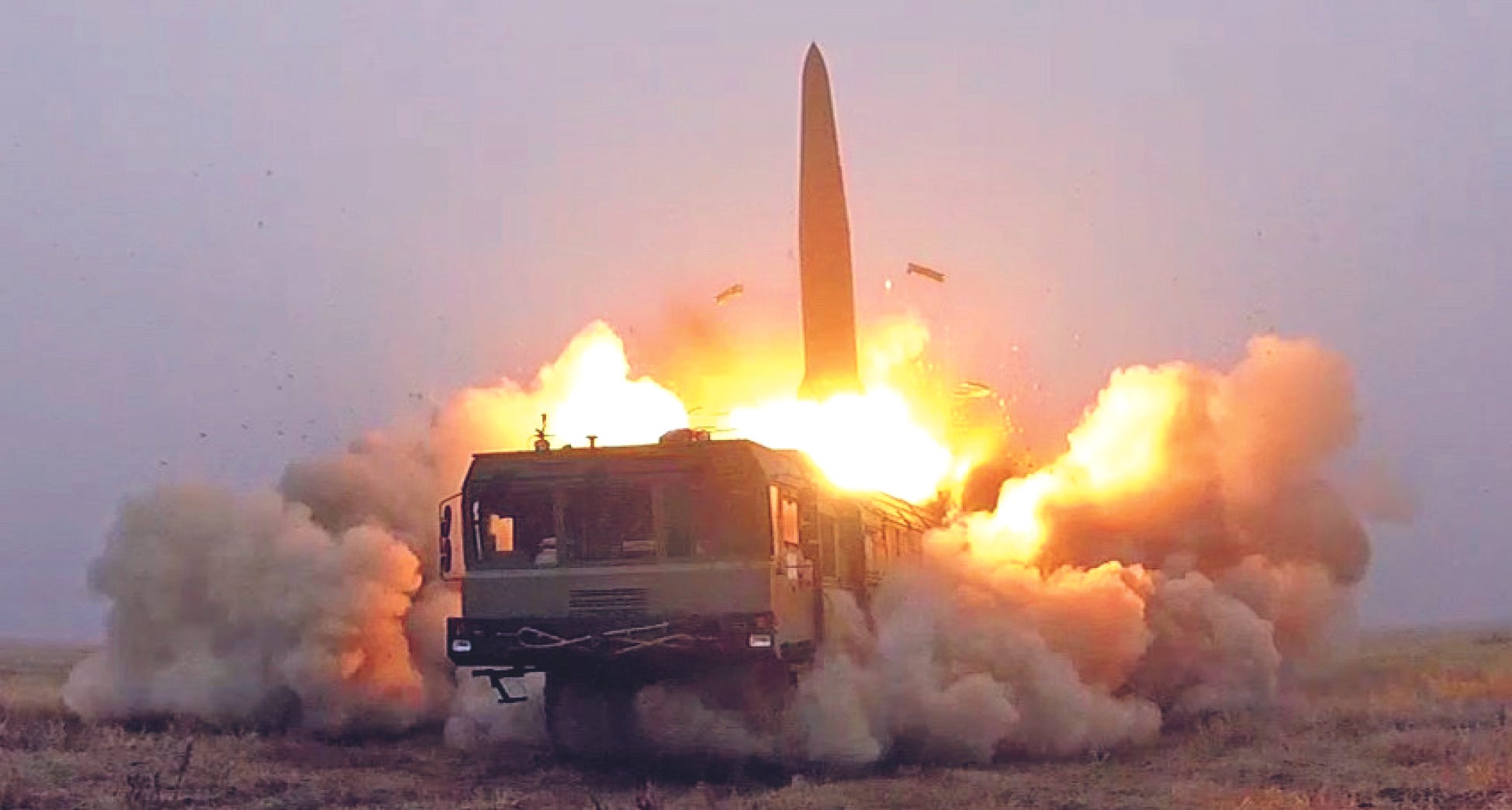
Renowned for its precision and versatility, the Iskander missile system has come to represent Russian military power, with its frequent use giving rise to what some have dubbed the process of "Iskanderization." It continues to draw the attention of military analysts and the media, with its specifications and capabilities widely discussed in defense publications.
以精准性和多用途性著称的伊斯坎德尔导弹系统,已成为俄罗斯军事实力的象征。其频繁使用催生了被某些观察家称为"伊斯坎德尔化"的进程。这款武器系统持续吸引着军事分析家和媒体的关注,其性能参数在防务出版物中被广泛讨论。
Yet beyond the numbers lies a deeper narrative. To truly understand the Iskander system, one must look beyond performance metrics and examine the operational principles, design rationale, and tactical logic that define it. This exploration goes beyond raw data to uncover the strategic thinking that underpins its development.
然而数据背后隐藏着更深层的叙事。要真正理解伊斯坎德尔系统,必须超越性能指标,审视定义它的作战原则、设计理念和战术逻辑。这种探索将穿透原始数据,揭示支撑其发展的战略思维。
What follows is an in-depth look at one of the world’s most effective tactical missile platforms. This is not a strictly technical article filled with complex details; instead, it takes a descriptive and accessible approach, aimed at helping the ordinary reader, without a technical or military background, grasp the essence of what lies behind the Iskander system. By breaking down its core concepts and strategic significance, this exploration aims to make the subject more accessible to a broader audience.
以下是对全球最具效力的战术导弹平台之一的深入剖析。本文并非充斥技术细节的专业论述,而是采用通俗易懂的叙述方式,旨在帮助没有技术或军事背景的普通读者理解"伊斯坎德尔"系统的核心要义。通过解析其基本概念与战略意义,本次探讨力求让更广泛的受众理解这一主题。
Origins 起源
Ballistic missiles first emerged in the 20th century, beginning with the Nazi Germany V-2, the world’s first tactical ballistic missile. Capable of delivering a one-ton explosive warhead over a distance of 300 kilometers, the V-2 marked the dawn of a new era in warfare.
弹道导弹最早出现于 20 世纪,纳粹德国的 V-2 火箭作为世界上首款战术弹道导弹开创了先河。这种能携带一吨炸药战斗部、射程达 300 公里的武器,标志着战争新纪元的到来。
Following World War II, as ballistic missile technology progressed toward intercontinental capabilities, the development of tactical ballistic missile systems continued in parallel. A practical upper range limit for these tactical systems was established at approximately 500 kilometers. Within this range, missiles could be made small enough to be mounted on self-propelled launch platforms, typically adapted from tank or heavy truck chassis. This significantly enhanced their mobility and operational flexibility, enabling rapid deployment and repositioning. As a result, tactical ballistic missiles gained the ability to strike strategic targets deep within enemy territory—targets that had previously been beyond the reach of conventional artillery or shorter-range systems.
第二次世界大战后,随着弹道导弹技术向洲际能力发展,战术弹道导弹系统的研发也在同步推进。这类战术系统的实用射程上限被设定在约 500 公里范围内。在此射程内,导弹可被设计得足够小巧,以便搭载在自行发射平台上——这类平台通常由坦克或重型卡车底盘改装而成。此举显著提升了导弹的机动性和作战灵活性,使其能够快速部署与转移阵地。由此,战术弹道导弹获得了打击敌境纵深战略目标的能力,这些目标以往是传统火炮或短程系统无法企及的。
Tactical ballistic missiles were developed to destroy high-value ground targets, including air defense systems, airfields, rail junctions, industrial facilities, storage depots, bridges, command posts, communication centers, and power plants. Their limited accuracy—often with errors measured in hundreds of meters—was compensated by planning the use of nuclear warheads, which ensured effective destruction despite imprecise targeting.
战术弹道导弹的研发旨在摧毁高价值地面目标,包括防空系统、机场、铁路枢纽、工业设施、仓储基地、桥梁、指挥所、通信中心和发电厂。其精度有限——误差常达数百米——通过规划使用核弹头来弥补,确保了即使瞄准不精确也能实现有效摧毁。
The combination of mobility, range, and immense destructive power proved highly effective, driving the continuous evolution of tactical missile systems throughout the Cold War and beyond.
机动性、射程与巨大破坏力的结合被证明极为有效,推动着战术导弹系统在冷战期间及之后的持续演进。
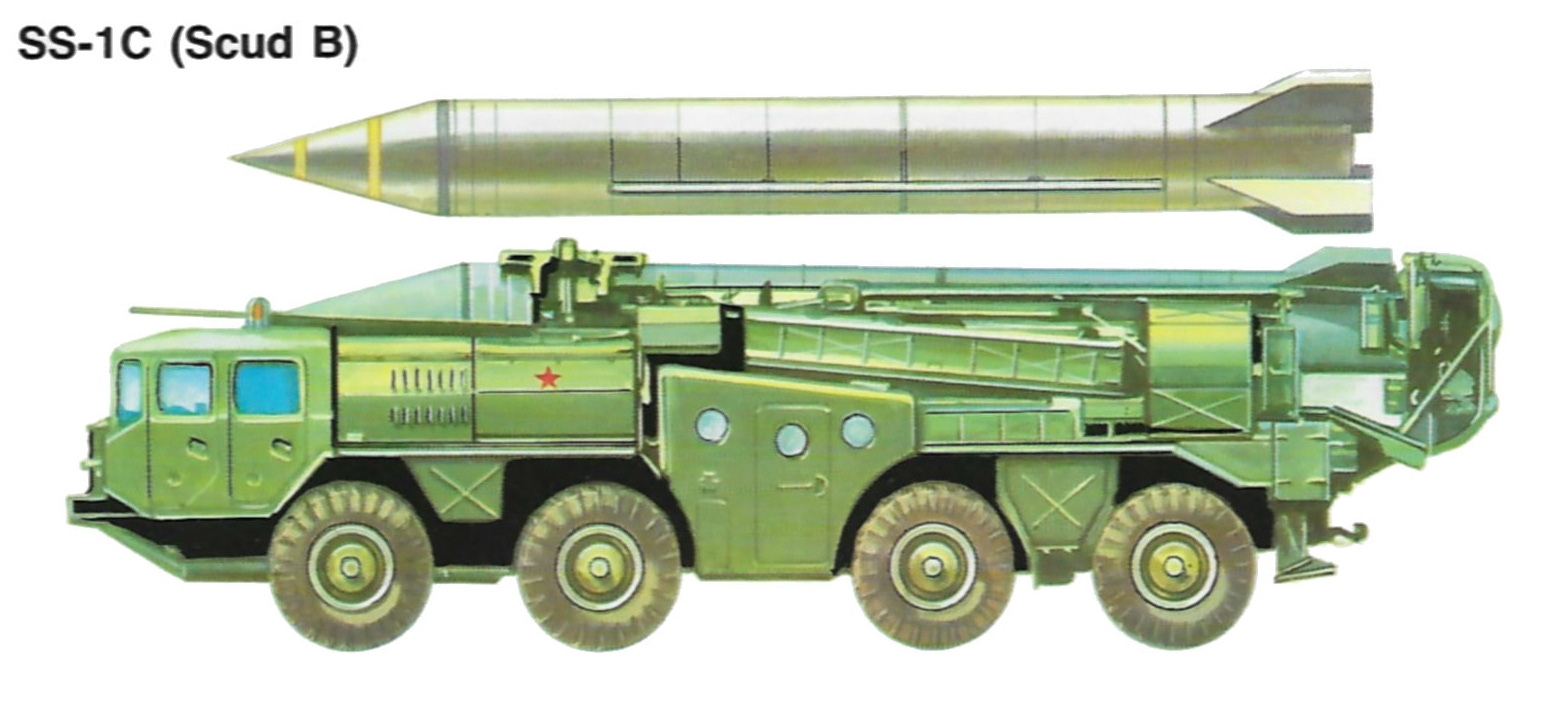
In 1955, the Soviet Union introduced the R-11 missile system, which had a range of 270 kilometers. NATO designated it as the Scud-A ("Squall"). This was followed in 1962 by the Elbrus tactical missile system, armed with the R-17 missile—better known in the West as the Scud-B. These early systems used liquid-fueled motors and were guided only during the boost phase, after which they followed a ballistic trajectory to their target.
1955 年,苏联推出了射程达 270 公里的 R-11 导弹系统,北约代号"飞毛腿-A"。1962 年又装备了搭载 R-17 导弹的"厄尔布鲁士"战术导弹系统,该导弹在西方更广为人知的名称是"飞毛腿-B"。这些早期系统采用液体燃料发动机,仅在助推段进行制导,之后沿弹道轨迹飞向目标。
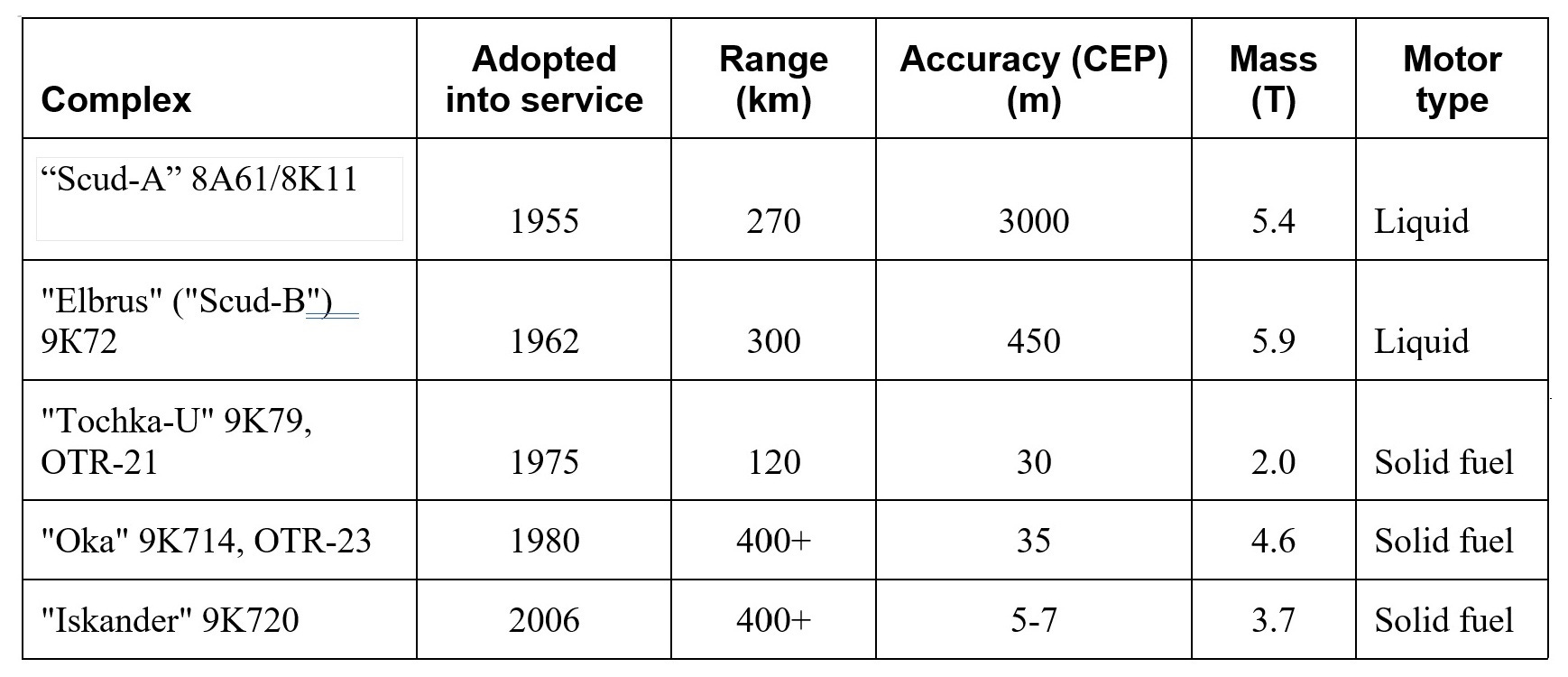
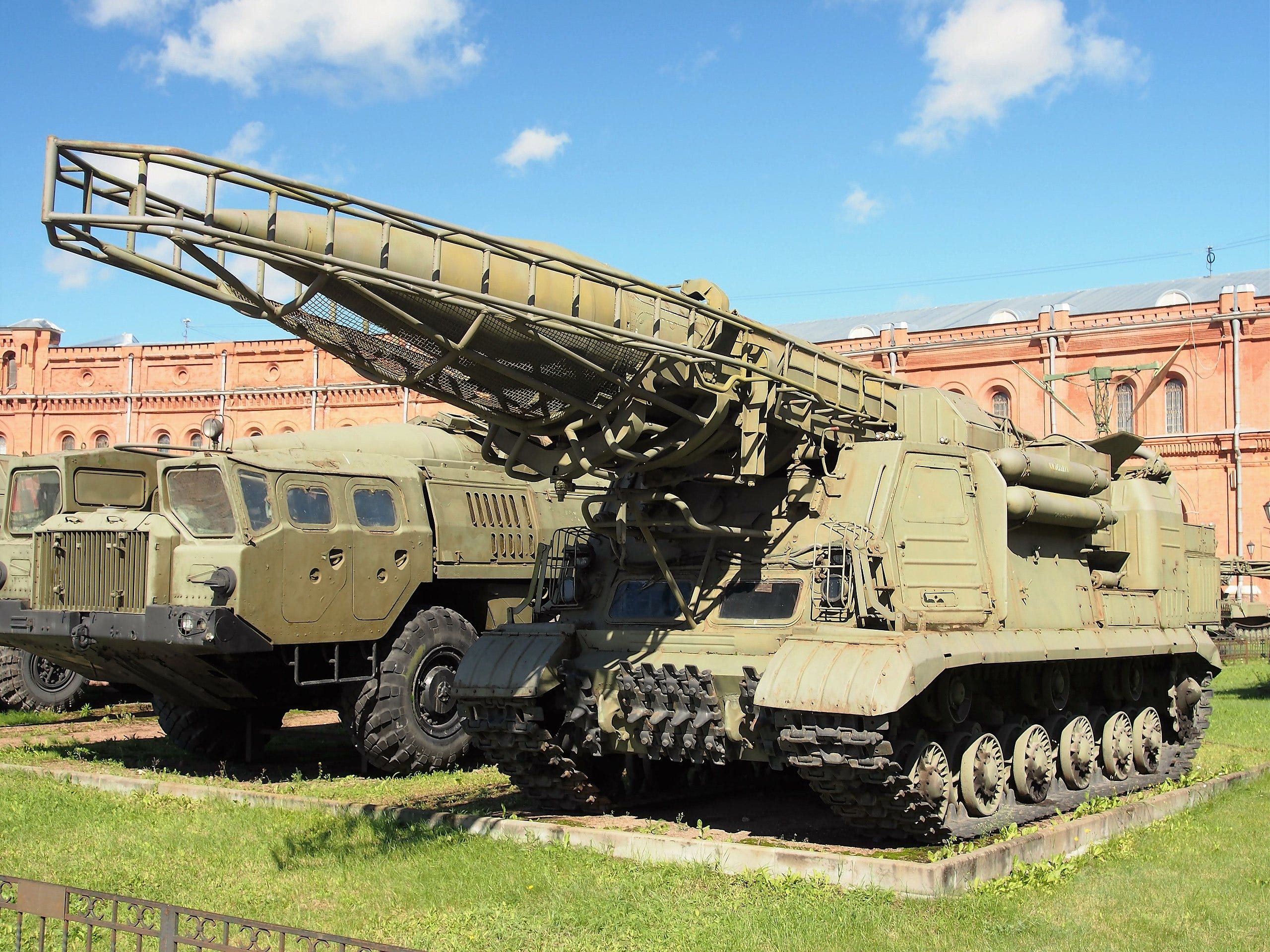
The next stage in the evolution of tactical ballistic missiles was marked by the introduction of solid-fuel propulsion and in-flight control throughout the entire trajectory—a significant leap in accuracy and responsiveness. In 1975, the Soviet Union adopted the Tochka-U missile system, which featured short stabilizing fins located mid-body to enhance flight stability.
战术弹道导弹发展的下一阶段以采用固体燃料推进和全程飞行控制为标志,这显著提升了打击精度与响应速度。1975 年,苏联列装的"圆点-U"导弹系统在弹体中段加装短稳定翼,大幅增强了飞行稳定性。
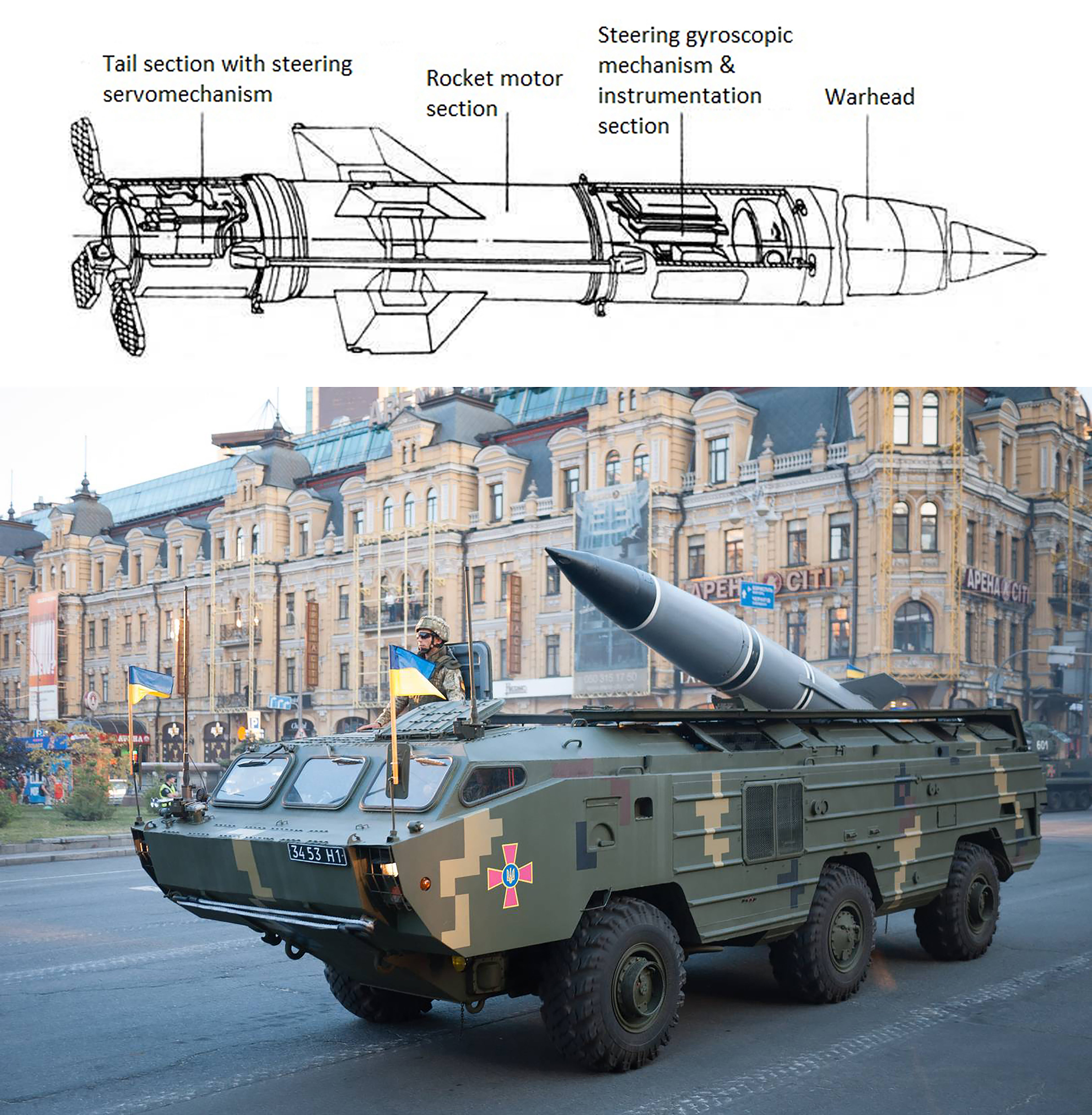
This was followed in 1980 by the Oka missile system, which introduced lattice fin control surfaces at the rear of the missile, offering improved maneuverability and control during flight.
随后在 1980 年,奥卡导弹系统问世,该导弹在尾部采用了栅格舵控制面,显著提升了飞行过程中的机动性与操控性能。
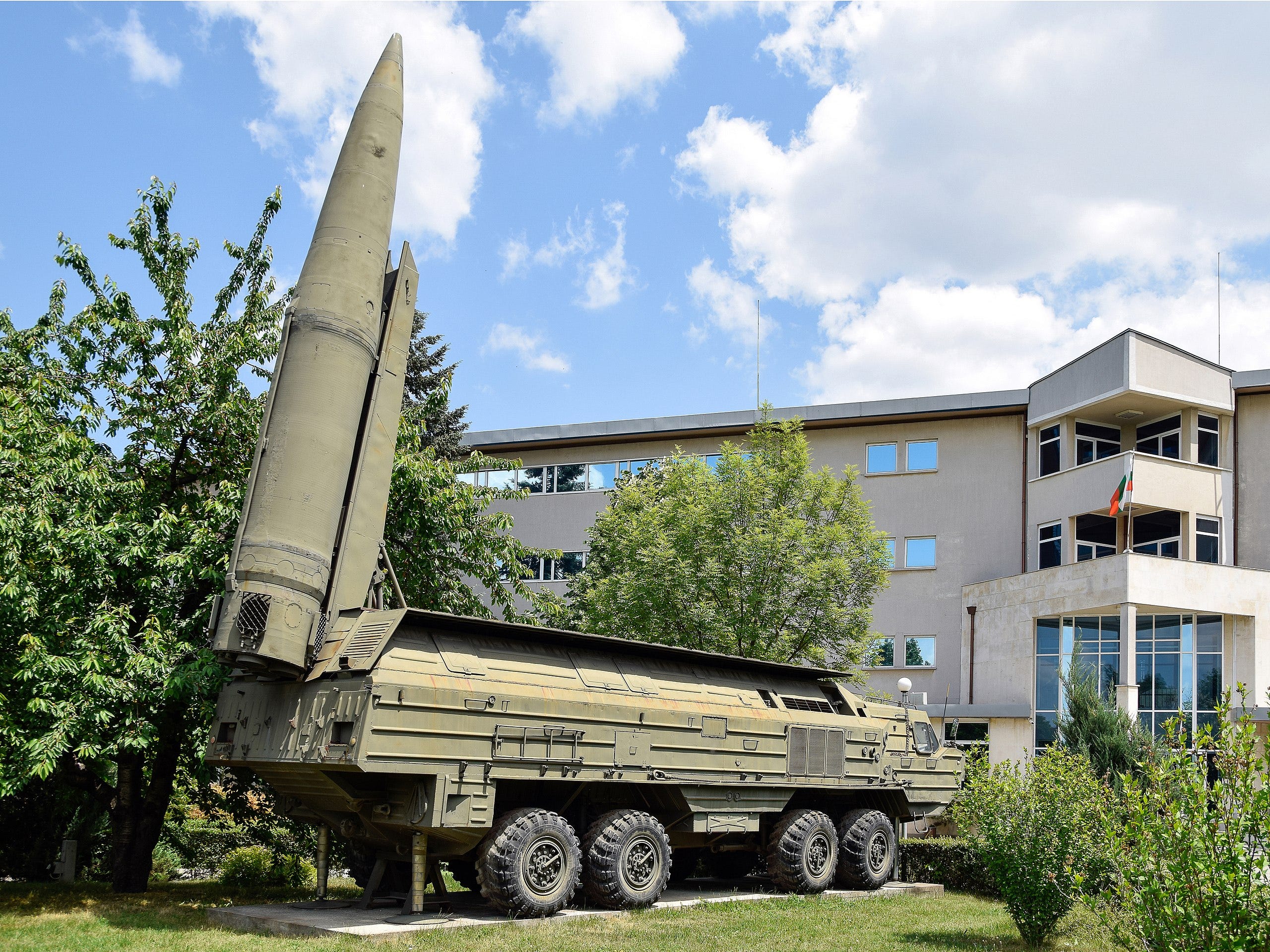
The most significant leap came in 2006 with the introduction of the Iskander missile system. The Iskander missile system was developed under the leadership of Chief Designer Oleg Ivanovich Mamalyga. Representing a new generation of precision-guided tactical ballistic weapons, Iskander combined advanced guidance systems, high mobility, and pinpoint accuracy, setting a new standard in battlefield missile technology.
最重大的飞跃出现在 2006 年"伊斯坎德尔"导弹系统的列装。该导弹系统由总设计师奥列格·伊万诺维奇·马马雷加领衔研制。作为新一代精确制导战术弹道武器,"伊斯坎德尔"集先进制导系统、高机动性和精确打击能力于一体,为战场导弹技术树立了新标杆。
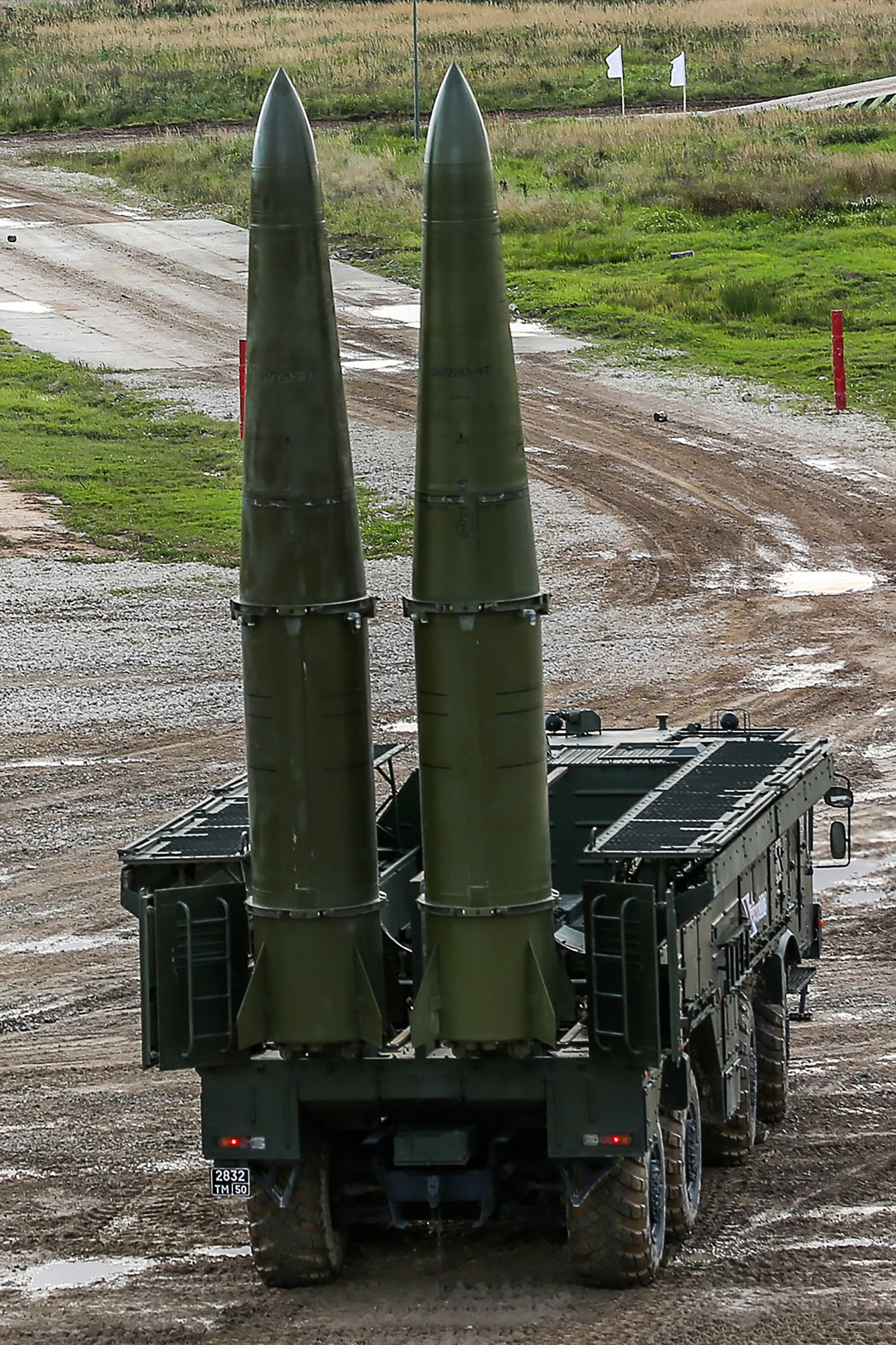
Trajectories and Aerodynamics Behind Iskander
伊斯坎德尔导弹的轨迹与空气动力学原理
Aerodynamic Lift and the Extended Trajectory of Ballistic Missiles
弹道导弹的气动升力与延伸轨迹
While air resistance is typically regarded as a force that slows down ballistic objects, it can also play a crucial and often underestimated role in extending a missile's flight path, thanks to aerodynamic lift. In certain flight conditions, this lift can be substantial, sometimes exceeding the force of gravity by several times, thereby significantly influencing the missile’s trajectory.
虽然空气阻力通常被视为减缓弹道物体运动的力,但由于气动升力的作用,它也能在延长导弹飞行路径方面发挥关键且常被低估的作用。在某些飞行条件下,这种升力可能相当显著,有时甚至能超过重力数倍,从而对导弹轨迹产生重大影响。
At supersonic speeds, a repeating pattern of airflow compression forms along the missile's body. Even a small angle of attack, as little as one or two degrees, can create intense aerodynamic pressure on the side facing the airflow. This pressure is typically strongest around the midsection of the missile and weaker toward the ends, where the airflow begins to curve and wrap around the body.
在超音速状态下,导弹弹体表面会形成重复的气流压缩模式。即使仅有 1-2 度的微小攻角,也能在迎风面产生强烈的气动压力。这种压力通常在导弹中段最为强烈,而在两端逐渐减弱——在那里气流开始弯曲并环绕弹体流动。
When these pressure forces are analyzed across the missile’s entire surface, they combine into a net lifting force. This lift supports the missile in flight by counteracting gravity and delaying its descent. In some cases, the generated lift can be much greater than the missile’s own weight, producing not only vertical lift but also significant lateral (side) forces that influence the missile's path.
当这些压力作用在导弹整个表面时,它们会合成为一个净升力。这种升力通过抵消重力延缓导弹下落,从而支撑导弹飞行。在某些情况下,产生的升力可能远大于导弹自重,不仅能提供垂直升力,还会产生显著影响导弹轨迹的横向(侧向)作用力。
The overall effect of aerodynamic lift is governed by the interaction of flight speed, air density, and the missile’s angle of attack, forming a complex but powerful mechanism that enables precision maneuvering and extended range during flight.
气动升力的整体效果由飞行速度、空气密度与导弹攻角的相互作用决定,这种复杂而强大的机制使导弹能够在飞行过程中实现精确机动并延长射程。
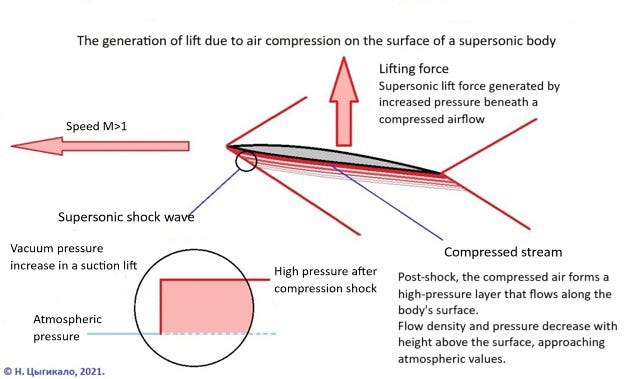
图片来源:N. Tsygikalo 2021
Aerodynamic Lift and the Aeroballistic Trajectory
气动升力与空气弹道轨迹
The lift generated by a missile doesn't need to act strictly upward—it can also be angled or even directed horizontally. When oriented this way, the lift force pushes the missile sideways, allowing it to curve its flight path left or right. By precisely controlling both the magnitude and direction of the lift, the missile can perform sharp trajectory adjustments and even execute aerial maneuvers while in flight.
导弹产生的升力并不需要严格向上作用——它也可以倾斜甚至水平方向。当以这种方式定向时,升力会将导弹推向侧面,使其飞行路径向左或向右弯曲。通过精确控制升力的大小和方向,导弹可以在飞行中实现急剧的轨迹调整,甚至执行空中机动动作。
One particularly important application of aerodynamic lift is its ability to extend flight time by delaying descent. When used in this manner, the missile's otherwise ballistic trajectory is elongated in the direction of travel. This results in a semi-ballistic flight path—still following the general form of a traditional ballistic arc, with a gradual climb, a peak, and a descending segment—but now influenced by aerodynamic forces during its passage through the atmosphere.
空气动力升力的一项特别重要应用,在于其能通过延缓下落来延长飞行时间。当导弹采用这种飞行方式时,原本的弹道轨迹会在飞行方向上得到延伸。由此形成半弹道飞行路径——仍保持传统弹道弧线的基本形态,包含逐渐爬升、顶点和下坠阶段——但在穿越大气层时会受到空气动力作用的影响。
In this modified trajectory, aerodynamic lift reduces the missile's descent rate, causing the downward arc to flatten. As a result, the missile travels farther than it would along a purely ballistic path, and the impact point shifts forward, effectively increasing its range.
在这一改良弹道中,空气动力升力降低了导弹的下坠速率,使得下降弧线趋于平缓。其结果是导弹飞行距离比纯弹道轨迹更远,着弹点前移,从而有效增加了射程。
This hybrid trajectory, which blends the characteristics of ballistic motion with sustained aerodynamic influence, is known as an aeroballistic trajectory.
这种混合弹道融合了弹道运动特性与持续气动影响,被称为气动弹道轨迹。
Variations of Aeroballistic Trajectories
气动弹道轨迹的多种变体
Aeroballistic trajectories can take several forms, generally grouped into two primary categories:
弹道飞行轨迹可分为多种形式,主要归为两大类:
Trajectories that remain entirely within the atmosphere
完全在大气层内飞行的弹道Trajectories that include a midsection extending into near space
弹道轨迹中包含一段延伸至近太空的中段飞行
The design and onboard systems of a missile depend heavily on which of these two flight profiles it follows, i.e., whether or not the missile exits the atmosphere for a portion of its flight.
导弹的设计与机载系统在很大程度上取决于其遵循的两种飞行轨迹之一,即导弹是否在部分飞行阶段脱离大气层。
In space-extending aeroballistic trajectories, only the ascent and descent phases occur within the atmosphere. These phases are where aerodynamic lift becomes a crucial factor.
在空间延伸的航空弹道轨迹中,只有上升和下降阶段发生在大气层内。这两个阶段是空气动力升力成为关键因素的区间。
During ascent, aerodynamic lift can reduce the reliance on vertical thrust from the rocket motor. By increasing the angle of inclination and enhancing horizontal acceleration, lift allows the missile to conserve fuel that would otherwise be used for vertical climb. This results in an extended flight range. A useful comparison is the Pegasus space launch vehicle, which used a triangular supersonic wing to generate lift during its atmospheric ascent. Similarly, a missile’s angled fuselage—even without dedicated wings—can produce enough lift to aid its climb.
在上升阶段,气动升力可降低对火箭发动机垂直推力的依赖。通过增大倾角并增强水平加速度,升力作用使导弹能够节省原本用于垂直爬升的燃料,从而延长飞行距离。可类比参考"飞马座"太空运载火箭——该火箭在大气层上升阶段利用三角超音速机翼产生升力。同理,导弹的倾斜弹体即便没有专用机翼,也能产生足够升力辅助爬升。During descent, as the missile reenters the atmosphere, aerodynamic forces once again come into play. Lift can be used to flatten the reentry trajectory, shifting the impact point farther downrange and increasing overall range. Additionally, these aerodynamic forces can enable evasive maneuvers, helping the missile avoid interception by enemy air defenses.
导弹下降过程中,当重返大气层时,气动力将再次发挥作用。升力可用于压平再入轨迹,使弹着点向射程远端偏移,从而增加整体射程。此外,这些气动力还能实现规避机动,帮助导弹避开敌方防空系统的拦截。
The combination of aerodynamic control and high-speed maneuvering makes aeroballistic missiles difficult to predict and counter, giving them a strategic advantage in modern warfare.
气动控制与高速机动的结合,使得航空弹道导弹难以预测和拦截,在现代战争中具有战略优势。
Maneuvering Beyond the Atmosphere and Within
大气层内外机动
Missile maneuvering is not limited to the atmospheric phases of flight. In the space segment, if the missile is equipped with small onboard maneuvering engines, it can perform midcourse trajectory adjustments outside the atmosphere as well. When these maneuvers are frequent and substantial, the flight path is often referred to as quasi-ballistic—a term that remains loosely defined and lacks formal technical classification. Nonetheless, it is commonly used to describe non-traditional, actively adjusted trajectories that diverge from the predictable arcs of purely ballistic missiles.
导弹机动不仅限于大气层内的飞行阶段。在太空段,若导弹配备小型机载机动发动机,同样能在大气层外进行中段弹道调整。当这类机动频繁且幅度较大时,其飞行轨迹常被称为"准弹道"——这个术语至今定义宽泛,缺乏正式技术分类,但普遍用于描述区别于纯弹道导弹可预测弧线的、经过主动调整的非传统轨迹。
The space segment also offers a strategic opportunity for deploying decoys or false targets, which can be released mid-flight. In such operations, the missile typically avoids further maneuvering after releasing decoys to maintain camouflage within the cloud of false targets. Any additional movement could expose the missile’s true identity and compromise the deception.
太空段还为部署诱饵或假目标提供了战略机会,这些诱饵可在飞行中途释放。在此类行动中,导弹通常在释放诱饵后避免进一步机动,以保持在假目标群中的伪装效果。任何额外动作都可能暴露导弹的真实身份,从而破坏欺骗效果。
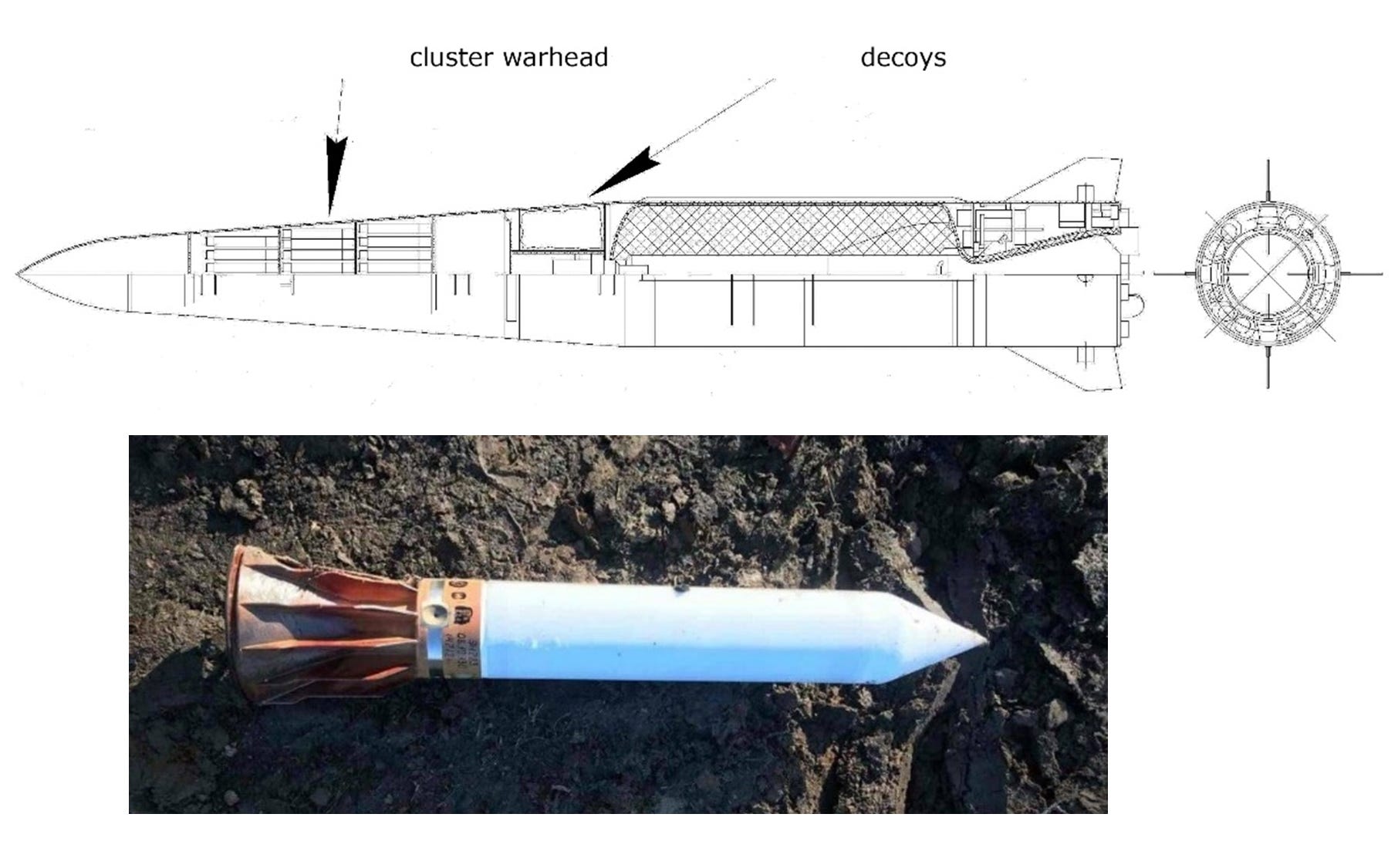
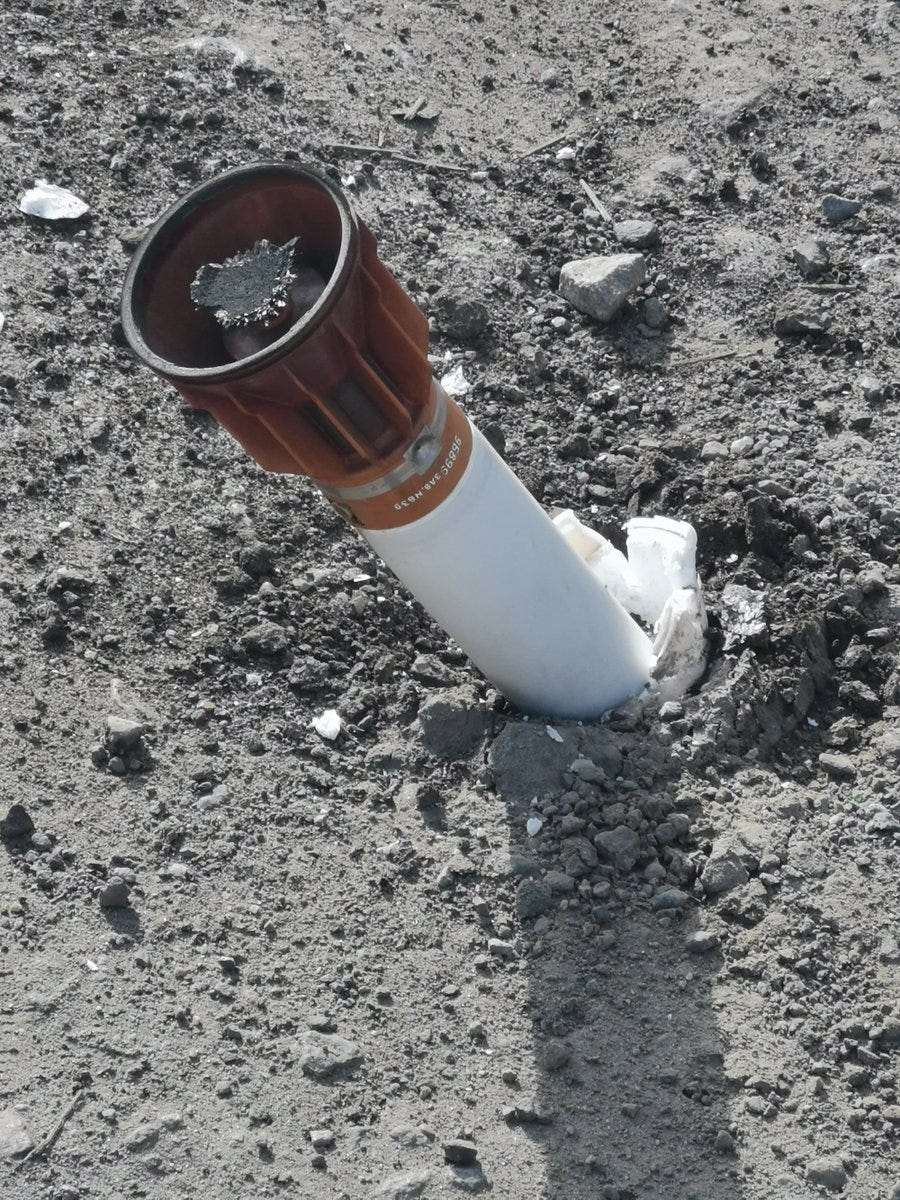
在乌克兰境内发现了"伊斯坎德尔"导弹诱饵。这些诱饵的设计能有效模拟导弹的雷达反射截面,使"爱国者"等防空系统误将诱饵识别为真实导弹目标。
Alternatively, a missile can follow an entirely atmospheric trajectory, remaining within the atmosphere throughout its flight. While this limits maximum range due to atmospheric drag, it offers the advantage of continuous aerodynamic maneuverability. This ability to perform evasive maneuvers at all altitudes can greatly enhance survivability, increasing the likelihood of the missile penetrating air defenses and successfully reaching its target.
另一种选择是导弹全程在大气层内飞行。虽然大气阻力会限制其最大射程,但这种飞行方式具有持续气动机动性的优势。导弹可在所有高度进行规避机动,这能大幅提升生存能力,增加突破防空系统并成功命中目标的概率。
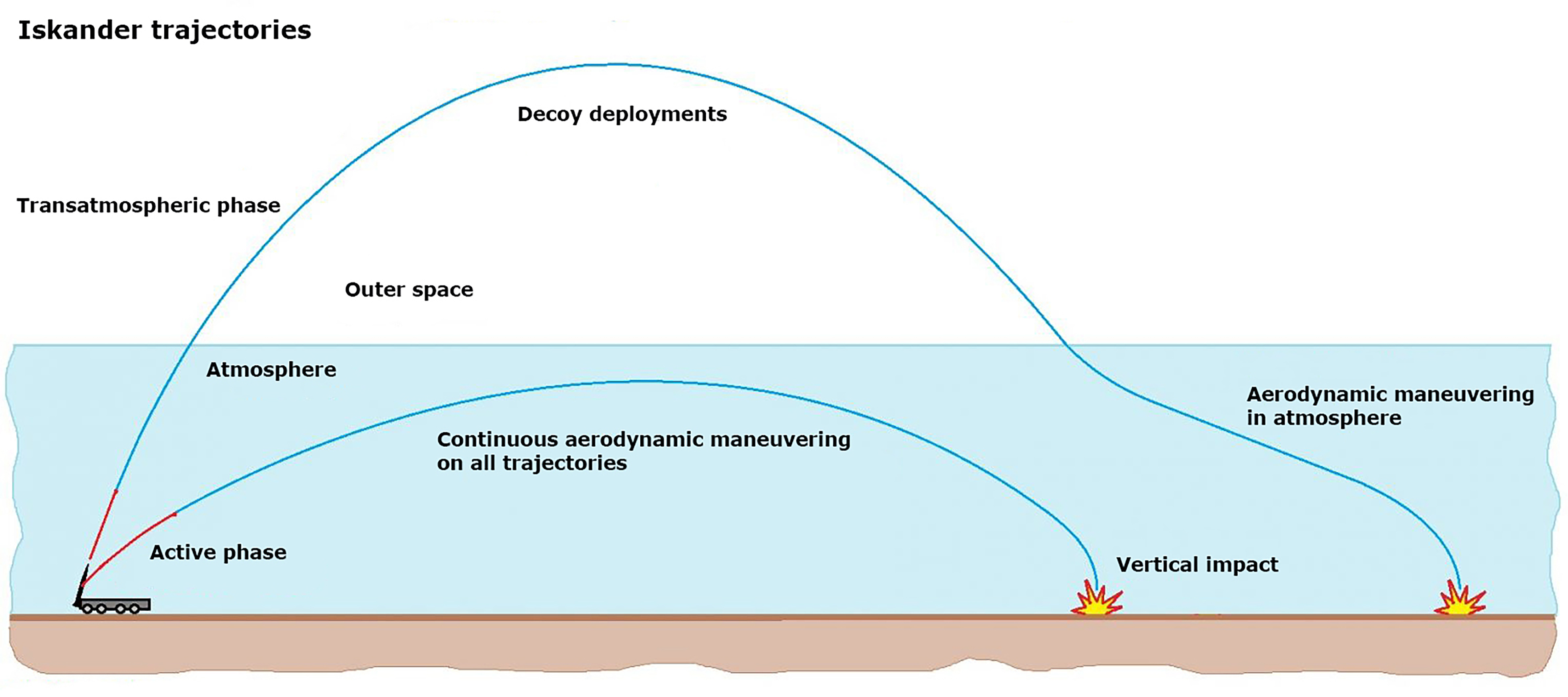
The Trajectory of the Iskander Missile
《伊斯坎德尔导弹的轨迹》
The Iskander missile system is engineered to employ a flexible range of flight trajectories, combining both exoatmospheric ballistic arcs and flatter, aeroballistic paths within the atmosphere.
"伊斯坎德尔"导弹系统设计采用灵活的飞行弹道,兼具大气层外的弹道弧线与大气层内更平直的空气动力弹道。
The classic exoatmospheric ballistic trajectory remains a core option, maximizing the missile’s range. In this mode, the missile ascends above the dense layers of the atmosphere, significantly reducing air resistance during the high-altitude segment of its flight. Upon reentry, aerodynamic lift can be used to flatten the descending trajectory, extending the range by pushing the impact point farther downrange.
经典的弹道外大气层飞行轨迹仍是核心选择,可最大化导弹射程。该模式下导弹会攀升至稠密大气层之上,在飞行的高空段大幅降低空气阻力。再入阶段可利用空气动力升力拉平下降轨迹,通过将弹着点推至更远距离来延伸打击范围。
Moreover, the exoatmospheric segment enables the missile to deploy multiple decoys, including a variety of false targets. Instead of a single, easily trackable target, enemy defenses are confronted with a complex cloud of potential threats—not a “fat duck,” but a blurry flock of sparrows. This deliberate tactic complicates interception efforts, making defense systems’ targeting more challenging.
此外,导弹的外大气层段能释放多种诱饵,包括各类虚假目标。敌方防御系统面临的不是单一易追踪目标,而是一团复杂的潜在威胁集群——不是"肥鸭",而是一群模糊难辨的麻雀。这种精心设计的战术使拦截行动复杂化,大幅提升了防御系统的瞄准难度。
Alternatively, the Iskander can execute a low, entirely atmospheric trajectory. While this profile consumes more energy due to constant atmospheric drag—resulting in a shorter maximum range—it offers a critical advantage: continuous aerodynamic maneuvering. By exploiting atmospheric lift and control, the missile can perform real-time evasive maneuvers, significantly increasing its chances of penetrating dense air defense zones.
另一种选择是,"伊斯坎德尔"导弹可采用全程低空大气层内飞行弹道。虽然这种飞行模式因持续的大气阻力消耗更多能量——导致最大射程缩短——但它具有一个关键优势:能够持续进行气动力机动。通过利用大气升力和操控系统,该导弹可实施实时规避机动,大幅提升突破密集防空区域的成功率。
Although maneuvering reduces effective speed to target (due to a longer flight path), it greatly enhances survivability and mission reliability. This atmospheric flight profile is actively employed by the Iskander system, demonstrating its versatility in adapting to complex battlefield environments.
尽管机动飞行会因航程延长而降低有效攻击速度(飞行路径更长),但它显著提升了生存能力和任务可靠性。伊斯坎德尔系统积极采用这种大气层内飞行模式,充分展现了其适应复杂战场环境的多功能性。
Official specifications often cite the missile’s flight altitude as 50 kilometers, but it remains unclear whether this figure refers to:
官方技术参数常标注该导弹飞行高度为 50 公里,但尚不明确这一数据是指:
The maximum altitude reached during a relatively flat aeroballistic arc, or
弹道相对平缓时达到的最大高度,或A sustained quasi-horizontal flight at around 50 km altitude, where the missile performs extended gliding maneuvers, gradually converting excess speed into greater range through a shallow, controlled descent.
在约 50 公里高度保持准水平持续飞行,导弹通过延长滑翔机动,以平缓受控的下降姿态逐步将多余速度转化为更远射程。
Velocity Profile of the Iskander Missile:
伊斯坎德尔导弹速度剖面:
End of boost phase: approximately 2,100 m/s
助推段结束:约 2100 米/秒Start of terminal phase: approximately 2,600 m/s
末段开始:约 2600 米/秒Near target (impact phase): approximately 700–800 m/s
接近目标(撞击阶段):约 700-800 米/秒
Speed is a critical factor that directly influences both the missile’s range and its maneuverability throughout the flight. Higher velocity enhances the aerodynamic forces the missile can generate, improving its capability to evade interception. Consequently, delivering and maintaining the required speed is the primary objective of the propulsion system.
速度是直接影响导弹射程及全程机动性的关键因素。更高的速度能增强导弹产生的气动力,提升其规避拦截的能力。因此,推进系统的首要任务就是实现并保持所需速度。
Propulsion - the Solid-Fuel Core of the Iskander
推进系统——伊斯坎德尔导弹的固体燃料核心
Every missile trajectory begins with its motor, often called the “engine”, the critical component that establishes the missile’s velocity and provides the essential impulse for ballistic flight. However, for modern tactical systems like the Iskander, propulsion demands extend well beyond basic ballistic requirements.
每枚导弹的飞行轨迹都始于其动力装置——通常被称为"发动机"的关键部件,它决定了导弹的速度并为弹道飞行提供必要推力。然而,对于"伊斯坎德尔"这样的现代战术系统而言,推进系统的要求远超出基础弹道需求。
Early tactical missile motors were primarily liquid-fueled. These motors delivered high energy efficiency and enabled thrust modulation, providing precise control during flight. However, they posed significant logistical challenges. Liquid-fueled missile systems required extensive support, including convoys of fuel and oxidizer tankers, compressor stations, and auxiliary equipment. The lengthy fueling process reduced battlefield responsiveness and increased vulnerability during the launch preparation phase.
早期战术导弹发动机主要采用液体燃料。这种发动机能效高,可实现推力调节,为飞行过程提供精准控制。然而其后勤保障面临重大挑战。液体燃料导弹系统需要大量配套支持,包括燃料与氧化剂运输车队、压缩站及辅助设备。漫长的燃料加注过程降低了战场响应速度,增加了发射准备阶段的脆弱性。
By contrast, solid-fuel rockets simplify operations dramatically and enable much faster launch readiness. This rapid response capability represents a critical tactical advantage, despite solid fuels typically having lower energy density compared to liquid propellants. Still, the production of large, reliable, and consistent solid-fuel charges demands advanced technological expertise and rigorous quality control.
相比之下,固体燃料火箭大幅简化了操作流程,并能实现更快速的发射准备。这种快速响应能力构成了关键的战术优势,尽管固体燃料的能量密度通常低于液体推进剂。然而,大规模生产可靠且性能稳定的固体燃料装药,需要先进的技术专长和严格的质量控制。
The primary difficulty in producing solid fuel lies in manufacturing large solid propellant blocks that are:
生产固体燃料的主要难点在于制造大型固体推进剂药柱,这些药柱需要满足:
Uniform in composition and density throughout their entire volume,
成分和密度在其整个体积内均匀一致,Mechanically stable over time, resisting sagging, cracking, or delamination during extended storage,
长时间保持机械稳定性,在长期储存过程中抵抗下垂、开裂或分层Resilient to extreme stresses, including accelerations of up to 30 g experienced during launch and in-flight maneuvers.
能够承受极端应力,包括发射和飞行机动过程中高达 30g 的加速度。
While the exact formulations used in the Iskander remain classified, the general composition of modern solid propellants provides valuable insight into their likely makeup.
虽然伊斯坎德尔导弹使用的具体配方仍属机密,但现代固体推进剂的一般成分为我们了解其可能构成提供了重要线索。
Typical solid rocket fuel consists of:
典型的固体火箭燃料成分包括:
Oxidizer: Crushed ammonium perchlorate (NH₄ClO₄), which releases oxygen when heated.
氧化剂:粉碎的高氯酸铵(NH₄ClO₄),受热时会释放氧气。Fuel components: 燃料组件:
Finely powdered aluminum, which burns intensely in the released oxygen at temperatures around 3300°C.
精细研磨的铝粉,在释放的氧气中剧烈燃烧,温度可达约 3300°C。Hydrocarbon binder-fuel, usually polybutadiene acrylonitrile rubber (PBAN), which acts both as a combustible and as a binder holding the propellant mixture together.
碳氢化合物粘合剂燃料,通常为聚丁二烯丙烯腈橡胶(PBAN),既作为可燃物又作为粘合剂将推进剂混合物固定成型。
To optimize performance, various additives are incorporated:
为提高性能,产品中添加了多种添加剂
Plasticizers — to provide pliability to the uncured mixture during processing.
增塑剂——用于在加工过程中为未固化混合物提供可塑性。Epoxy hardeners — to stabilize the final cured fuel.
环氧固化剂——用于稳定最终固化燃料。Catalysts and inhibitors — to control the combustion rate.
催化剂与抑制剂——用于调控燃烧速率。Oxidation inhibitors and phlegmatizers — to reduce sensitivity to friction, shock, and temperature fluctuations.
抗氧化剂和钝感剂——用于降低对摩擦、冲击及温度波动的敏感性。
The final product resembles a dense, rubbery material similar in texture to a pencil eraser. A representative solid fuel composition might be:
最终产物呈现一种致密、富有弹性的材质,质地类似于铅笔橡皮擦。典型的固体燃料配方可能包含:
69.6% ammonium perchlorate (oxidizer)
69.6% 高氯酸铵(氧化剂)16% metallic aluminum (fuel)
16%金属铝(燃料)12% polybutadiene acrylonitrile (fuel + binder)
12%聚丁二烯丙烯腈(燃料+粘合剂)1.96% epoxy hardener 1.96%环氧树脂固化剂
0.4% iron powder (catalyst)
0.4%铁粉(催化剂)
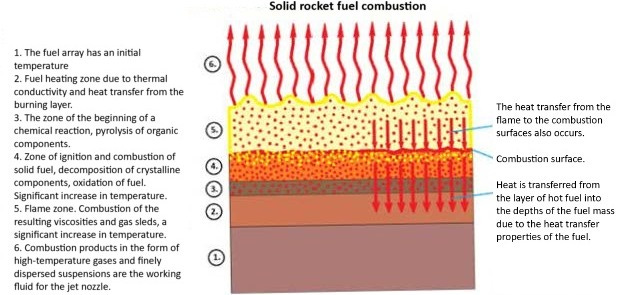
This robust and precisely engineered solid-fuel core enables the Iskander missile to achieve high initial speeds—up to 2,600 m/s—and supports rapid launches with minimal logistical requirements. These capabilities are crucial for a modern, mobile tactical missile system designed to operate effectively under time-sensitive and contested battlefield conditions.
这种坚固且精密设计的固体燃料核心使"伊斯坎德尔"导弹能够实现高达 2600 米/秒的初始速度,并支持在最低后勤需求下快速发射。这些能力对于一款现代机动战术导弹系统至关重要,该系统专为在时间敏感且充满对抗的战场环境中高效作战而设计。
The Critical Nature of Proper Fuel Combustion
燃料充分燃烧的关键性
For a missile like the Iskander, simply igniting the fuel is not enough—the combustion process must be precisely controlled. Solid fuel combustion involves numerous interdependent physical and chemical processes, many too complex to be fully captured by analytical models. Despite this complexity, the combustion must behave predictably to ensure the safe and effective operation of the engine.
对于"伊斯坎德尔"这样的导弹来说,仅仅点燃燃料是远远不够的——燃烧过程必须得到精确控制。固体燃料燃烧涉及众多相互依存的物理和化学过程,其中许多复杂到无法通过分析模型完全捕捉。尽管存在这种复杂性,燃烧过程仍必须保持可预测性,以确保发动机安全有效地运行。
The fuel must burn: 燃料必须燃烧:
· Evenly and predictably, following the design specifications.
· 均匀且可预测地,按照设计规范执行。
· Without transitioning into detonation, which could damage the missile.
· 避免转为爆轰,以免损坏导弹。
· Without combustion instability, such as:
· 避免燃烧不稳定,例如:
o High-frequency acoustic oscillations disrupting chamber pressure.
o 高频声波振荡扰乱燃烧室压力。
o Gas-dynamic instabilities affecting smooth engine operation.
o 气体动力不稳定性影响发动机平稳运行。
The Iskander’s solid-fuel motor operates for a very brief duration—enough to propel the missile approximately 12–15 kilometers before burnout, depending on the chosen trajectory. After this brief powered phase, the missile continues its flight entirely under the influence of inertia, guided by aerodynamic and inertial controls.
"伊斯坎德尔"导弹的固体燃料发动机工作时间极短——根据选定弹道不同,仅能推动导弹飞行约 12 至 15 公里便燃烧殆尽。这段短暂的动力阶段结束后,导弹完全依靠惯性继续飞行,由气动舵面和惯性制导系统控制航向。
This brief burn implies several key points:
这段简短的燃烧暗示了几个关键点:
The missile experiences rapid acceleration immediately after launch,
导弹在发射后立即经历快速加速,The motor delivers extremely high thrust over a short period, and
该发动机能在短时间内提供极高的推力,The propulsion system is single-stage, with a single fuel grain burning continuously.
推进系统采用单级设计,由单一燃料药柱持续燃烧提供动力。
Exact figures for fuel mass, thrust, or burn duration remain classified or unavailable in open sources. However, based on observed performance and trajectory profiles, it is evident that the Iskander relies on a powerful, high-efficiency solid rocket motor optimized for speed, agility, and battlefield responsiveness.
关于燃料质量、推力或燃烧时长的具体数据仍属机密或未公开。不过,根据观测到的性能表现与弹道特征,可以确定"伊斯坎德尔"导弹采用了高效能固体火箭发动机,该系统专为提升速度、机动性和战场快速反应能力而优化。
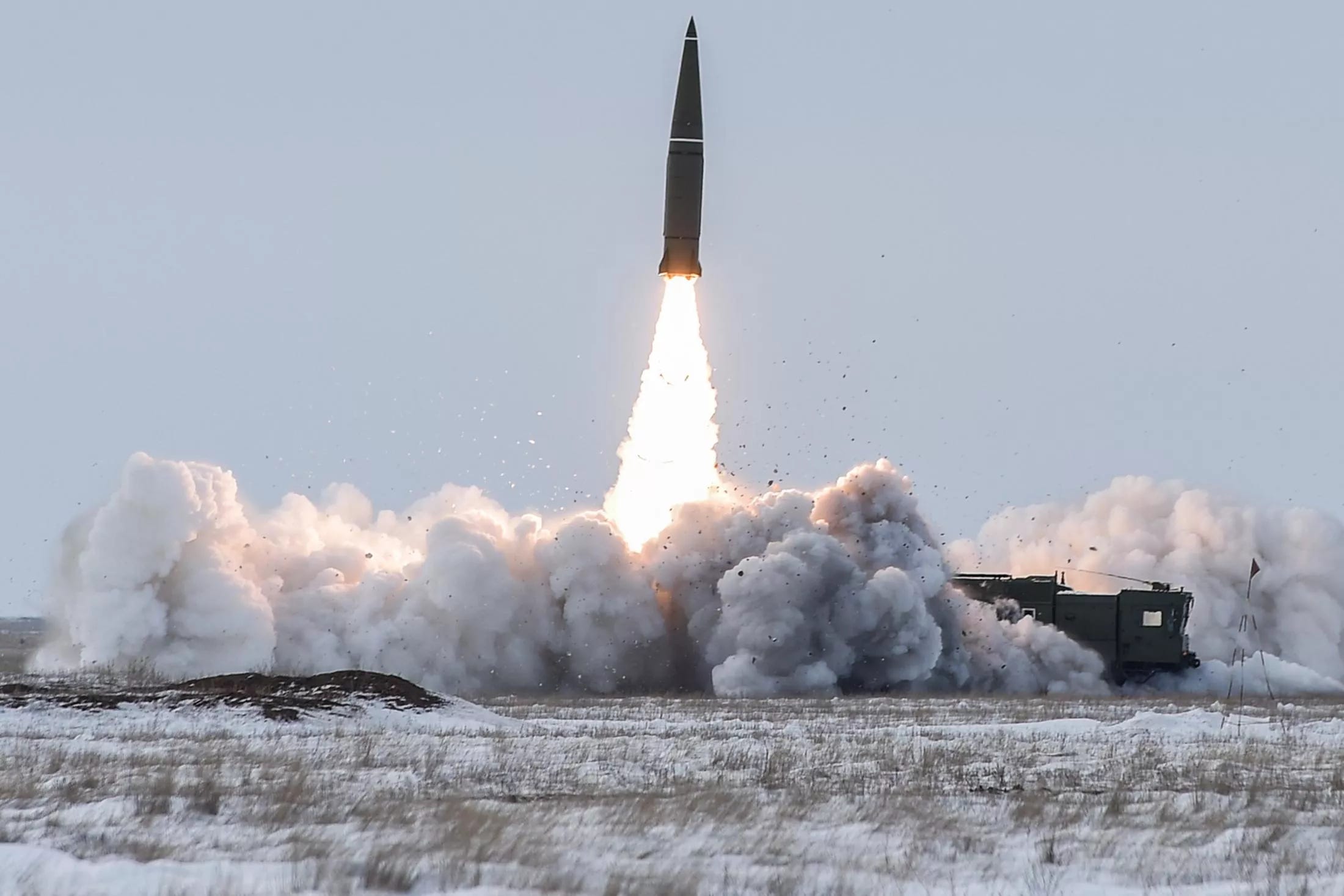
Missile Design 导弹设计
The Iskander missile’s airframe is divided into two main sections:
伊斯坎德尔导弹的弹体主要分为两个部分:
A rear cylindrical section that houses the solid-fuel motor,
容纳固体燃料发动机的后部圆柱形舱段,A front conical section containing the warhead, decoys, and various onboard systems, ending in a pointed nose fairing.
前部锥形段包含弹头、诱饵装置及各类机载系统,末端为尖形头锥整流罩。
This layout strategically shifts the center of pressure—the point along the missile’s length where aerodynamic forces act—toward the rear. When the center of pressure is located behind the missile’s center of mass, it creates a stabilizing aerodynamic moment, which enhances flight stability at high speeds.
这种布局策略性地将压力中心——导弹长度上气动力作用的点——后移。当压力中心位于导弹质心后方时,会产生稳定气动力矩,从而增强高速飞行时的稳定性。
The missile operates at high supersonic speeds and can reach hypersonic velocities of up to Mach 7. At such speeds, the airflow around the missile compresses and heats up dramatically, with temperatures exceeding 1,000°C.
该导弹以高超音速飞行,最高速度可达 7 马赫。在此极速下,导弹周围空气剧烈压缩升温,温度超过 1000 摄氏度。
To withstand these extreme conditions:
为了抵御这些极端条件:
The aerodynamic control surfaces are made of heat-resistant metals that can withstand intense thermal and aerodynamic stresses.
气动控制面由耐热金属制成,能够承受极端的热力与空气动力负荷。The missile’s body is coated with a thick polymer-based heat-protective layer.
导弹弹体覆盖着一层厚厚的聚合物基热防护层。
This coating also acts as a radar-absorbing material, reducing the missile’s radar cross-section and helping it evade detection by enemy air defense systems.
该涂层还兼具雷达吸波材料功能,能减小导弹的雷达反射截面,有助于躲避敌方防空系统的探测。
Additionally, the missile’s external design minimizes its radar signature by avoiding protrusions, visible joints, or openings on the surface. The smooth, flush design significantly reduces radar scattering, improving the missile’s stealth characteristics.
此外,该导弹的外部设计通过避免表面突起、可见接缝或开口,有效降低了雷达反射截面积。其流畅平整的外形显著减少了雷达波散射,大幅提升了导弹的隐身性能。
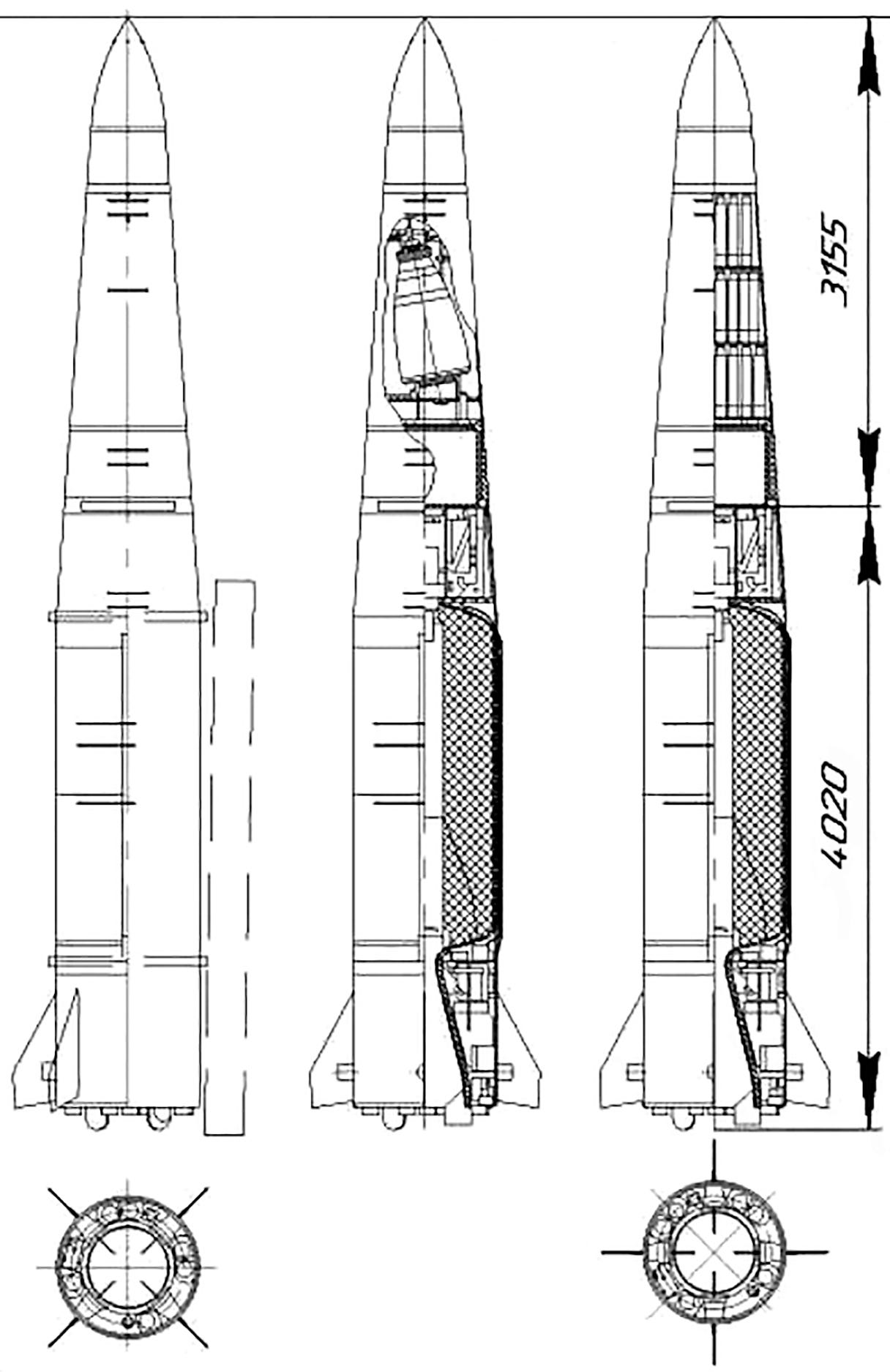
Structural Overview of the Iskander Missile System
《伊斯坎德尔导弹系统的结构概述》
The Iskander missile employs gas-dynamic rudders that operate inside the engine’s exhaust jet stream. These rudders are made from heat-resistant materials to withstand the extreme temperatures of the rocket plume. Their control effectiveness is particularly important during flight phases when traditional aerodynamic surfaces have limited influence, such as the first seconds after launch or at high altitudes where the air is very thin.
"伊斯坎德尔"导弹采用安装在发动机尾喷流内的气动舵面。这些舵面由耐高温材料制成,可承受火箭羽流的极端高温。在传统空气动力控制面作用受限的飞行阶段——例如发射后最初几秒或空气极其稀薄的高空环境——这类舵面的控制效能显得尤为重要。
These gas-dynamic rudders consist of four small fins positioned inside the engine’s nozzle jet. Fixed to the nozzle section, they work in tandem with the aerodynamic rudders to provide precise trajectory control. This technology has historical roots dating back to the German V-2 missile and remains an effective feature of the Iskander system.
这些燃气动力舵由四个小型翼片组成,安装在发动机喷管射流内部。它们固定于喷管段,与空气动力舵协同工作,实现精确的弹道控制。这项技术可追溯至德国 V-2 导弹时期,至今仍是"伊斯坎德尔"系统的有效特征。
By angling these rudders within the supersonic exhaust jet, they generate directional forces on the underside of the rocket, enabling it to pivot and finely adjust its flight path.
通过调整这些舵面在超音速尾流中的角度,它们能在火箭底部产生方向控制力,使其能够偏转并精确调整飞行轨迹。
Flight Control and Guidance System
飞行控制与制导系统
The flight control system performs several vital functions, with the primary objective being guidance, ensuring the missile’s flight path aligns precisely with the target coordinates.
飞行控制系统执行多项关键功能,其主要目标是制导,确保导弹飞行轨迹与目标坐标精确吻合。
At the heart of the navigation system is an Inertial Measurement Unit (IMU), which includes:
导航系统的核心是一个惯性测量单元(IMU),其组成包括:
· Three accelerometers that continuously and accurately measure acceleration along three mutually perpendicular axes,
· 三个持续精确测量三轴正交方向加速度的加速度计
· Integrators that process these acceleration signals into velocity, and subsequently, through double integration, into spatial coordinates.
· 将加速度信号处理为速度的积分器,进而通过二次积分转换为空间坐标。
This allows the inertial unit to continuously determine the missile’s current velocity vector (both magnitude and direction) and its precise position in three-dimensional space. Complementing this, gyroscopes track the missile’s angular orientation (pitch, yaw, and roll).
这使得惯性制导单元能够持续测定导弹当前的速度矢量(包括大小和方向)及其在三维空间中的精确位置。与此同时,陀螺仪则负责追踪导弹的角方位(俯仰、偏航和滚转)。
The control system continuously compares the measured velocity, position, and orientation data against the pre-programmed flight plan. It calculates any deviations and generates real-time control commands to the rudders, guiding the missile to:
控制系统持续将实测速度、位置及方位数据与预设飞行方案进行比对,通过计算偏差并实时生成舵面控制指令,引导导弹实现:
· Rotate relative to its center of mass and the oncoming airflow,
· 绕其质心与迎面气流相对旋转
· Adjust its position in space to stay on the desired trajectory.
· 调整其在空间中的位置以保持预定轨迹。
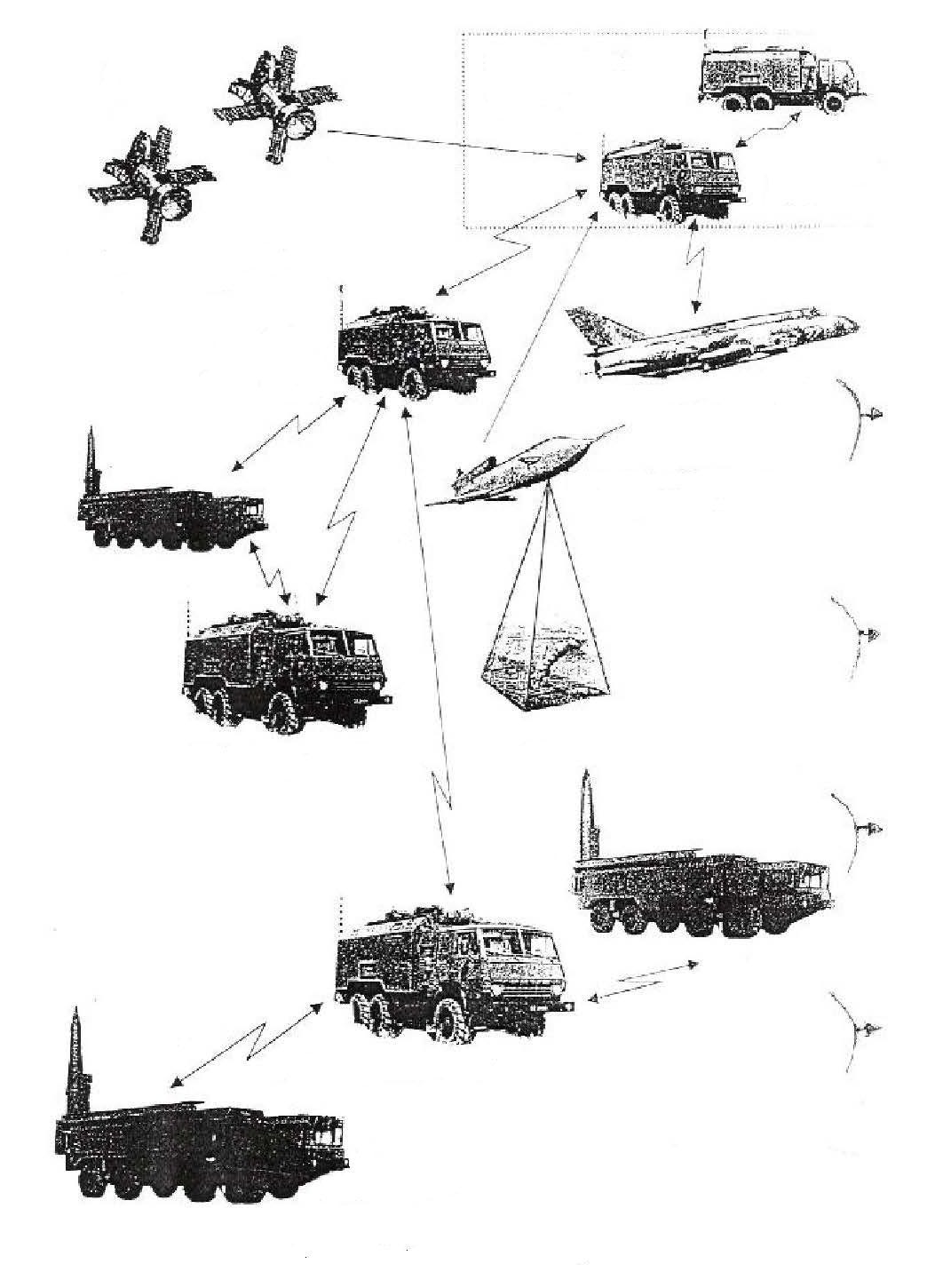
Additional Navigation Inputs
《伊斯坎德尔与"伊斯坎德尔化"[i] —— 迈克·米哈伊洛维奇著》
To enhance accuracy and reliability, the guidance system supplements inertial measurements with data from several additional sources:
为提高精确度和可靠性,该制导系统通过多个辅助数据源对惯性测量进行补充:
GLONASS satellite navigation, providing position corrections and reducing cumulative inertial navigation errors,
格洛纳斯卫星导航系统提供位置修正并减少惯性导航累积误差Radar homing heads, used during the terminal phase to detect and track the target actively,
雷达导引头,用于末段主动探测和跟踪目标,Optical homing systems further refine targeting accuracy in the final flight segment by visually identifying the target.
光学制导系统在末段飞行中通过视觉识别目标,进一步提高了命中精度。
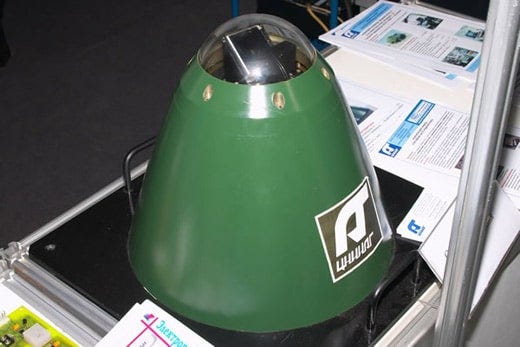
光学制导系统版本 9E436
This multi-layered navigation architecture significantly improves the missile’s precision and enables dynamic in-flight maneuvering to overcome defensive measures and reach the intended target.
这种多层导航架构显著提升了导弹的精确性,使其能够在飞行中动态机动,突破防御系统并准确命中预定目标。
Key Specifications of the 9M723 Aeroballistic Missile :
9M723 航空弹道导弹关键性能参数:
Length: 7.3 meters 长度:7.3 米
Diameter: 0.92 meters 直径:0.92 米
Weight: 3.8 tons 重量:3.8 吨
Flight Range: Up to 400 kilometers
飞行距离:可达 400 公里
Accuracy (Circular Error Probable - CEP):
精度(圆概率误差 CEP):
Without a homing system: 30–70 meters
无制导系统:30-70 米With a homing system: 5–7 meters
配备制导系统:精度 5-7 米
Interceptor Targeting Dynamics
拦截弹目标动态
Successful interception requires the anti-missile system to maintain continuous visual or sensor lock on the target. However, as the missile performs evasive maneuvers, it rapidly moves out of the interceptor’s field of view. To counter this, the interceptor must execute sharp lateral maneuvers, subjecting itself to high lateral overloads of 30–40 g to keep the target centered within its tracking sensors.
成功拦截要求反导系统对目标保持持续的视觉或传感器锁定。然而,当导弹进行规避机动时,它会迅速脱离拦截器的视野范围。为应对这种情况,拦截器必须执行剧烈的横向机动,承受 30-40g 的高横向过载,才能将目标始终锁定在跟踪传感器中心。
If the interceptor cannot generate the necessary overload to match the target’s evasive movements—meaning the required maneuvering exceeds the interceptor’s structural or control limits—it will either:
若拦截器无法产生足够的过载以匹配目标的规避机动——即所需机动超出拦截器的结构或控制极限——它将面临两种结果:
Destroy itself due to the excessive mechanical stresses, or
因承受过大的机械应力而自毁,或Lose lock on the target as it leaves the sensor’s field of vision, causing guidance failure and resulting in the termination of the interception attempt.
因目标脱离传感器视野而丢失锁定,导致制导失效,最终使拦截尝试终止。
This dynamic creates a significant tactical advantage for the Iskander missile’s maneuvering capability, effectively rendering interception highly impractical or even impossible.
这种动态为"伊斯坎德尔"导弹的机动能力创造了显著的战术优势,实际上使得拦截变得极不现实甚至不可能实现。
Maneuvering Algorithm Concept
机动算法概念
One possible approach for the Iskander’s evasive flight control could operate as follows:
伊斯坎德尔导弹规避飞行的控制机制可能按如下方式运作:
The control system projects a reference point several kilometers ahead along the missile’s planned (nominal) trajectory.
导弹控制系统沿预定(标称)弹道在数公里外投射出一个基准点。At this reference point, it constructs a flat square plane perpendicular to the trajectory. This plane is divided into equal cells arranged like a tic-tac-toe grid.
在此基准点上,它构建了一个与轨迹垂直的平坦方形平面。该平面被划分为如同井字棋网格般的等分单元格。Using a true random number generator, the control system selects one cell within the grid and designates a target “cross” at that location.
控制系统使用真随机数生成器在网格中选定一个单元格,并在该位置标记一个目标"十字"。The missile then maneuvers laterally to this cross, deliberately deviating from its nominal flight path.
导弹随后横向机动至该交叉点,有意偏离其标称飞行轨迹。Upon reaching the chosen cell, the reference point moves forward along the original trajectory, a new tic-tac-toe grid is drawn, and a new random target cell is selected.
抵达选定单元格后,参考点沿原始轨迹继续前进,绘制新的井字棋网格,并随机选取新的目标单元格。
This random, dynamic lateral movement makes the missile’s flight path unpredictable, greatly complicating interception attempts.
这种随机的动态横向移动使导弹飞行轨迹难以预测,极大增加了拦截难度。
Crucially, the choice of target cells is strictly random. If the system followed any predictable pattern, advanced algorithms could analyze previous maneuvers and forecast future ones, enabling interceptors to pre-position and increase their chances of success. Genuine randomness effectively prevents such prediction.
关键在于,目标的选择完全是随机的。如果系统遵循任何可预测的模式,先进算法就能分析先前的机动动作并预测未来的轨迹,从而使拦截器能够预先部署并提高成功概率。真正的随机性有效地防止了这种预测。
To keep the missile on course overall, the control logic continuously compares the missile’s lateral deviations within the tic-tac-toe grid against the general direction to the target. This ensures that while the missile “flutters” unpredictably, it never strays too far from its intended trajectory. The resulting flight resembles a mix of a free-falling stone and a fluttering maple leaf—combining ballistic motion with chaotic, evasive lateral shifts that severely hinder interception.
为保持导弹整体航向,控制系统会持续将导弹在井字格内的横向偏移与目标总体方向进行比对。这种设计确保导弹虽呈现不可预测的"飘飞"状态,却始终不会过度偏离预定轨迹。其最终飞行轨迹犹如自由落体的石块与飘舞枫叶的结合体——在弹道运动中混杂着难以捉摸的规避性横向位移,使拦截行动变得极其困难。
This explanation is schematic and simplified—the actual algorithm used by Iskander is more complex and remains classified.
这一解释仅为示意且经过简化——伊斯坎德尔实际使用的算法更为复杂,目前仍属机密。
Final Stage Maneuvers 最终阶段演习
In its terminal phase, the missile performs a steep vertical dive toward the target. This maneuver:
导弹在末段会以近乎垂直的角度俯冲攻击目标。这一机动动作:
Further complicates interception by minimizing the window for defensive systems to react;
通过最小化防御系统的反应窗口,进一步增加了拦截的难度;Brings the missile as close as possible to the target before impact;
在撞击前将导弹尽可能接近目标;Simplifies homing when the missile is equipped with an optical guidance system by providing a direct line of sight.
当导弹配备光学制导系统时,可提供直接视线以简化寻的过程。
Precision Hit Using the Correlation-Extreme Method
采用相关极值法实现精准打击
To achieve highly accurate strikes beyond the capabilities of inertial navigation alone, the missile can be equipped with an optical homing head, which delivers a precision accuracy of about 5 to 7 meters, sufficient for reliably hitting point targets.
为突破仅依赖惯性导航的精度极限,该导弹可配备光学导引头,其打击精度可达 5 至 7 米,足以可靠摧毁点状目标。
This optical homing uses the correlation-extreme method, working as follows:
这种光学制导采用相关极值法,其工作原理如下:
Prior to launch, the missile’s onboard memory is loaded with a high-resolution image of the target area’s terrain. This image is obtained from satellite, aircraft, or drone reconnaissance in the optical spectrum.
在发射前,导弹的机载存储器会载入目标区域地形的高清图像。这些图像通过卫星、飞机或无人机在光学频谱范围内进行侦察获取。As the missile approaches the target, its optical homing head continuously captures real-time images of the terrain below.
导弹接近目标时,其光学导引头持续捕捉下方的实时地形图像。The missile compares these live images with the stored reference image, using correlation algorithms to precisely identify the target area.
导弹将这些实时图像与存储的参考图像进行比对,通过相关算法精确识别目标区域。Once the terrain surrounding the target is recognized, the missile locks onto it and guides itself with high accuracy for the terminal strike.
一旦识别出目标周边地形,导弹便会锁定目标,并在末段制导阶段以高精度自行导向攻击。
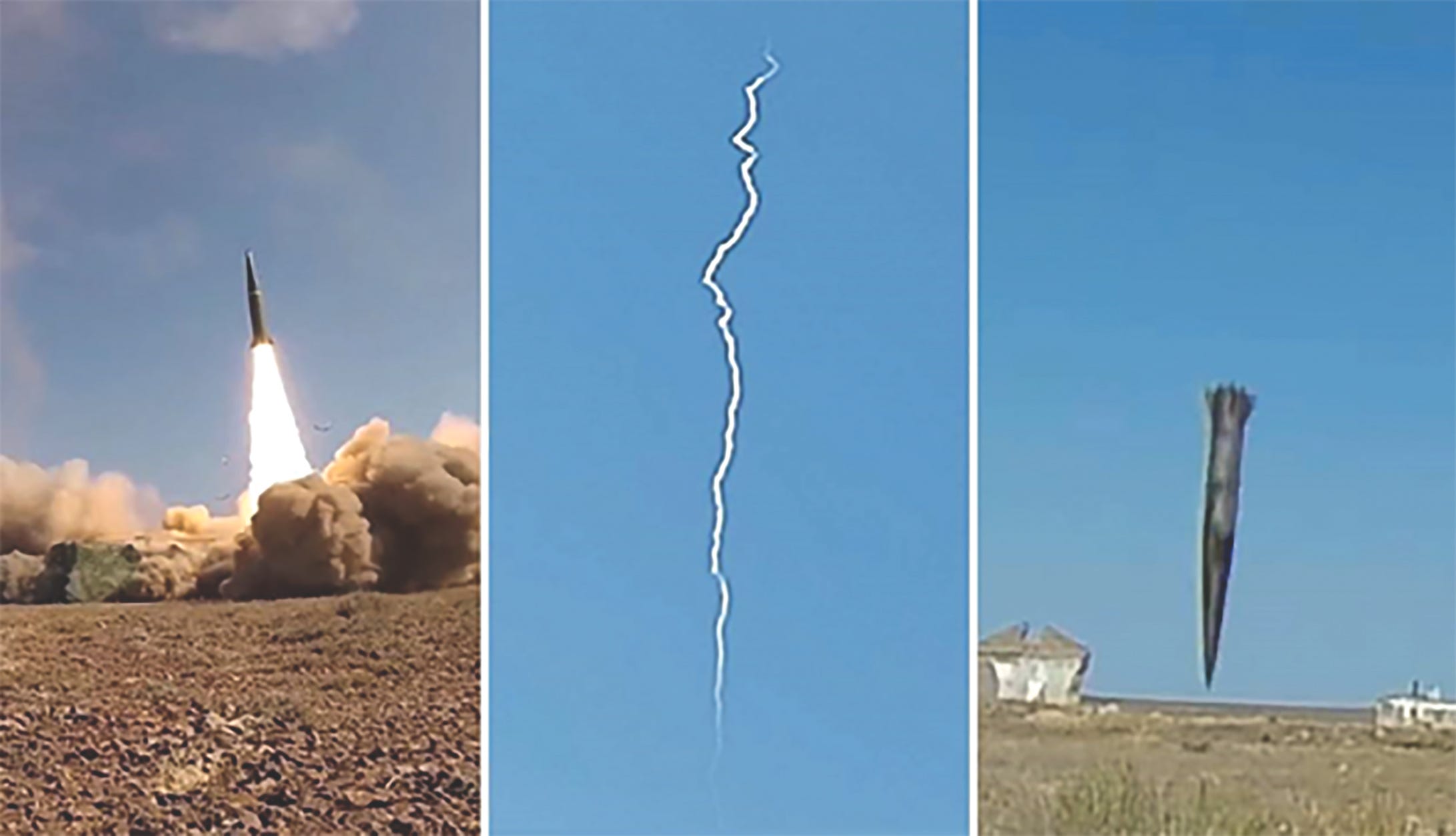
该导弹携带有目标区域的存储图像;飞行过程中持续拍摄下方地形;将实时图像与存储图像进行比对,检测匹配度;制导系统通过计算不断修正航向,使实时画面与存储图像渐趋吻合;气动舵面根据指令调整飞行轨迹;如此循环制导,最终精准命中目标。

乌克兰 Buk-M1 9A310 导弹发射车遭伊斯坎德尔导弹命中
Correlation-Extreme Method Explained
相关性极值法解析
Image Capture and Reference Storage
图像采集与基准存储
Before launch, the missile’s onboard computer is loaded with a high-resolution reference image of the target area. This image is taken from satellites, drones, or reconnaissance aircraft.
导弹发射前,其机载计算机将装载目标区域的高清基准图像。这些图像来源于卫星、无人机或侦察机拍摄。
Continuous Image Comparison During Flight
飞行过程中的连续图像对比
As the missile approaches the target, its optical homing head continuously captures real-time images of the terrain below. The homing system compares these live images with the stored reference.
导弹接近目标时,其光学导引头持续捕捉下方的实时地形图像。制导系统将这些实时画面与存储的基准数据进行比对。
Correlation: Measuring Similarity
相关性:衡量相似度
The system calculates a correlation coefficient, a numerical value indicating how closely the live image matches the reference image. A higher correlation means the current view is more similar to the target area.
该系统计算出一个相关系数,该数值表示实时图像与参考图像的匹配程度。相关系数越高,意味着当前视图与目标区域越相似。
Finding the Extreme (Maximum) Correlation
寻找极值(最大)相关性
The missile searches for the maximum correlation value — the point where the live and reference images match best. This “extreme” point signals the missile’s optimal position relative to the target.
导弹会寻找最大相关值——即实时图像与参考图像匹配度最高的点。这个"极值点"标志着导弹相对于目标的最佳攻击位置。
Trajectory Adjustment 弹道修正
Using this maximum correlation point, the missile’s guidance system makes precise trajectory corrections. It minimizes the difference between the missile’s current location and the exact target location by steering to increase correlation.
利用这一最大相关点,导弹制导系统进行精确的弹道修正。通过调整飞行方向增强相关性,将导弹当前位置与目标精确位置之间的差异降至最低。
Compensating for Errors 误差补偿
This method corrects small errors introduced by atmospheric disturbances or inertial navigation drift, effectively allowing the missile to “lock on” visually to the target during the final flight phase.
该方法能修正大气扰动或惯性导航漂移引入的微小误差,使导弹在末段飞行阶段实现"视觉锁定"目标的效果。
Handling Changing Perspectives
应对不断变化的观点
Because the missile views the terrain from different and changing angles, the live and stored images are never perfectly identical. The correlation coefficient quantifies how well the images match despite these differences.
由于导弹从不同且不断变化的角度观察地形,实时图像与存储图像永远不会完全一致。相关系数量化了这些差异下图像的匹配程度。
Advanced Algorithmic Guidance
先进算法指引
Onboard algorithms—often involving Kalman filters—analyze how small trajectory changes impact correlation, guiding continuous adjustments to maximize similarity and ensure precise impact.
机载算法——通常采用卡尔曼滤波器——通过分析微小弹道变化对相关性的影响,持续引导调整以最大化相似度,确保精确命中。
This method enables the missile to strike with high accuracy (5–7 meters CEP), making it highly effective against point targets.
这种方法使导弹能够以高精度(圆概率误差 5-7 米)实施打击,对点目标具有极高杀伤效能。
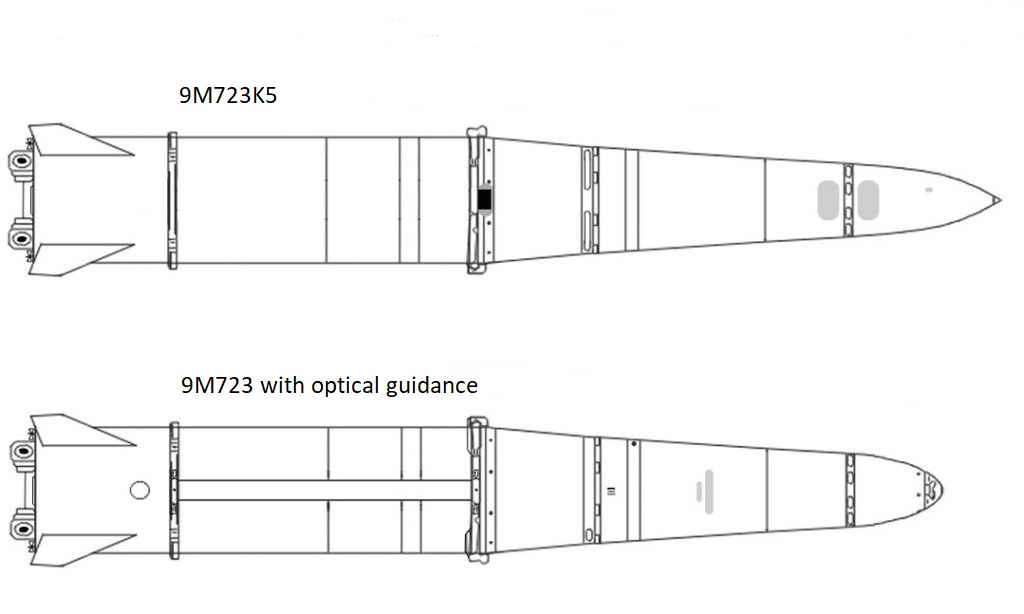
In simple terms, the correlation-extreme method means the missile searches for the spot where its current view of the terrain best matches the stored reference image of the target area. By analyzing how closely the two images match at any moment, the control system calculates how to steer the missile to improve that match.
简而言之,相关极值制导意味着导弹会寻找当前地形视野与存储的目标区域基准图像最匹配的点。通过实时分析两幅图像的匹配程度,控制系统计算出如何调整导弹航向以实现最佳匹配。
The control system then sends commands to the missile’s aerodynamic rudders, adjusting their angles to change the flight path accordingly. This process keeps repeating, guiding the missile closer and closer to the target.
控制系统随后向导弹的气动舵发送指令,调整舵面角度以相应改变飞行轨迹。这一过程不断重复,引导导弹逐渐逼近目标。
This method isn’t new. In the early 1980s, it was used in radar-guided form on the Pershing-2 medium-range ballistic missile, which corrected its course three times based on radar images of the terrain.
这种方法并不新鲜。早在 20 世纪 80 年代初,美国"潘兴-2"中程弹道导弹就采用过雷达制导形式,通过三次比对地形雷达图像来修正飞行轨迹。
Today, most cruise missiles use this approach. The Iskander missile can use either radar or optical homing heads. The radar version (designated 9B918) was introduced in 2009 with a modified missile (9M723-1F). The optical version (9E436) works because the missile slows down to supersonic speeds near the target (700-800 meters per second), avoiding a hot plasma layer that would otherwise block the homing head’s view.
如今,大多数巡航导弹都采用这种制导方式。"伊斯坎德尔"导弹可选择雷达或光学两种导引头。2009 年推出的雷达型(代号 9B918)需配合改进型导弹(9M723-1F)使用。光学型(9E436)则通过导弹在接近目标时减速至超音速(每秒 700-800 米),从而避开会遮挡导引头视线的热等离子体层实现精准制导。
Warhead of the Iskander Missile
伊斯坎德尔导弹弹头
The warhead of the Iskander missile weighs about 480 kilograms and can be configured in up to ten different types, covering a broad range of effects. These include both nuclear and non-nuclear options:
"伊斯坎德尔"导弹的战斗部重约 480 公斤,可配置多达十种不同类型弹头,实现多样化打击效果。其弹头类型既包括核弹头,也涵盖常规弹头:
Thermonuclear warhead: A special nuclear warhead estimated to have a yield of around 50 kilotons.
热核弹头:一种特殊核弹头,预估当量约为 5 万吨。Non-nuclear warheads: These cover nearly the full spectrum of explosive effects and are divided mainly into:
非核弹头:几乎涵盖所有爆炸效果类型,主要分为以下几类:
High-explosive warheads: 高爆弹头:
Designed to destroy point targets primarily through the shock wave of the explosion, enhanced with fragmentation or incendiary effects. There are three main types:
主要用于通过爆炸冲击波摧毁点目标,辅以破片或燃烧效应增强威力。主要分为三种类型:High-explosive fragmentation
高爆杀伤High-explosive incendiary
高爆燃烧弹Penetrating warheads, which have reinforced casings to break through roofs or barriers and detonate with a delay after penetration.
穿透型弹头,其加固外壳可击穿屋顶或障碍物,并在穿透后延迟引爆。
Fragmentation and scattering effects warheads:
破片杀伤与散布效应弹头:
The high-explosive warheads can fragment their thick casing into many pieces, which fly outward as deadly fragments. This transforms the blast energy into kinetic energy carried by the fragments, extending the damage radius beyond the immediate shock wave. This is especially effective at greater distances where the shock wave weakens.
高爆弹头能将厚重的壳体碎裂成无数破片,这些破片以致命速度向外飞散。爆炸能量由此转化为破片携带的动能,使杀伤半径超越冲击波直接作用范围。在冲击波衰减的远距离处,这种效应尤为显著。Cluster warheads: 集束弹头
Designed to engage multiple targets over a wide area.
设计用于在广阔区域内打击多个目标。These contain numerous submunitions (small bomblets) equipped with non-contact radio fuses.
这些导弹携带大量配备非接触式无线电引信的子母弹(小型炸弹)。The warhead releases the submunitions at an altitude of 1 to 1.5 kilometers, allowing them to disperse optimally.
弹头在 1 至 1.5 公里的高度释放子弹药,使其达到最佳散布效果。The submunitions then descend and detonate 6 to 10 meters above the ground, showering enemy personnel or soft targets with lethal fragmentation, similar to a massive airburst of shrapnel shells.
随后,子弹药会在距地面 6 至 10 米高度下降并引爆,如同巨型空爆榴霰弹般向敌方人员或软目标倾泻致命破片。
Other submunitions in cluster warheads are well known and have long been used as self-guiding combat elements designed to destroy mobile targets such as automotive and armored vehicles by detonating from above, where these vehicles have the least protection. This capability can also be effectively employed against aircraft and helicopters in parking areas.
集束弹头中的其他子弹药广为人知,长期以来被用作自导战斗单元,通过从上方引爆来摧毁汽车、装甲车等移动目标——这些部位正是车辆防护最薄弱之处。该能力同样可有效打击停机坪上的飞机与直升机。
Another common type is the cluster volumetric detonation warhead, which disperses a large aerosol cloud followed by a volumetric explosion, creating a widespread destructive effect.
另一种常见类型是集束式燃料空气战斗部,它先散布大量气溶胶云团,随后引发体积爆炸,产生大范围的毁伤效果。
Sophisticated fuses and detonation systems ensure the reliability of warhead and submunition detonation. Combined with powerful explosives and carefully engineered warhead designs, this results in high destructive efficiency and broad operational capabilities for the Iskander missile system.
精密的引信与起爆系统确保了弹头及子弹药引爆的可靠性。结合高能炸药与精心设计的弹头结构,使"伊斯坎德尔"导弹系统具备极高的毁伤效能与广泛的作战能力。
What Does a Missile Complex Consist Of?
导弹综合体由哪些部分组成?
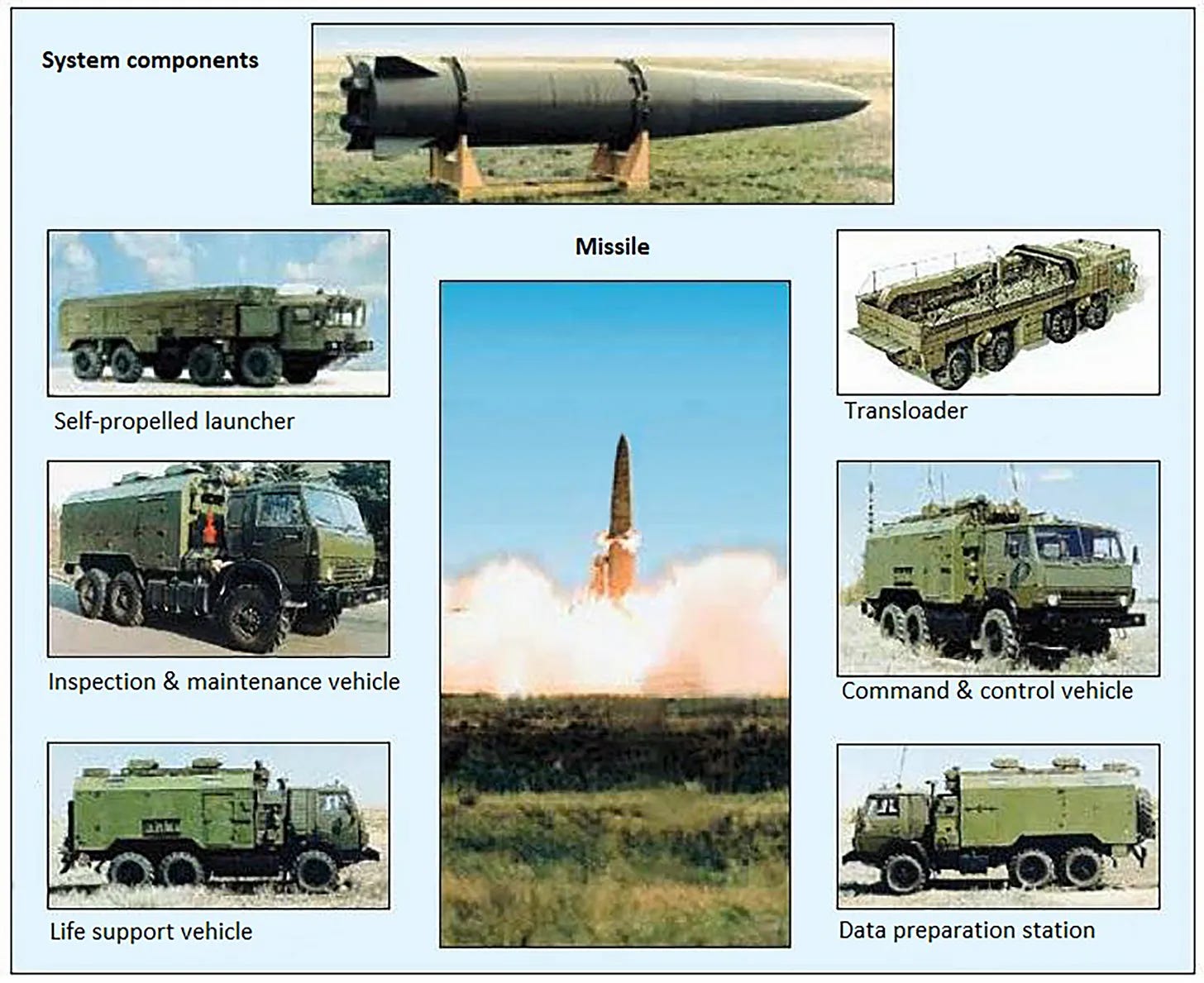
A missile complex includes more than just the missile itself. It typically comprises several integrated components:
导弹系统远不止导弹本身,通常由多个集成部件组成:
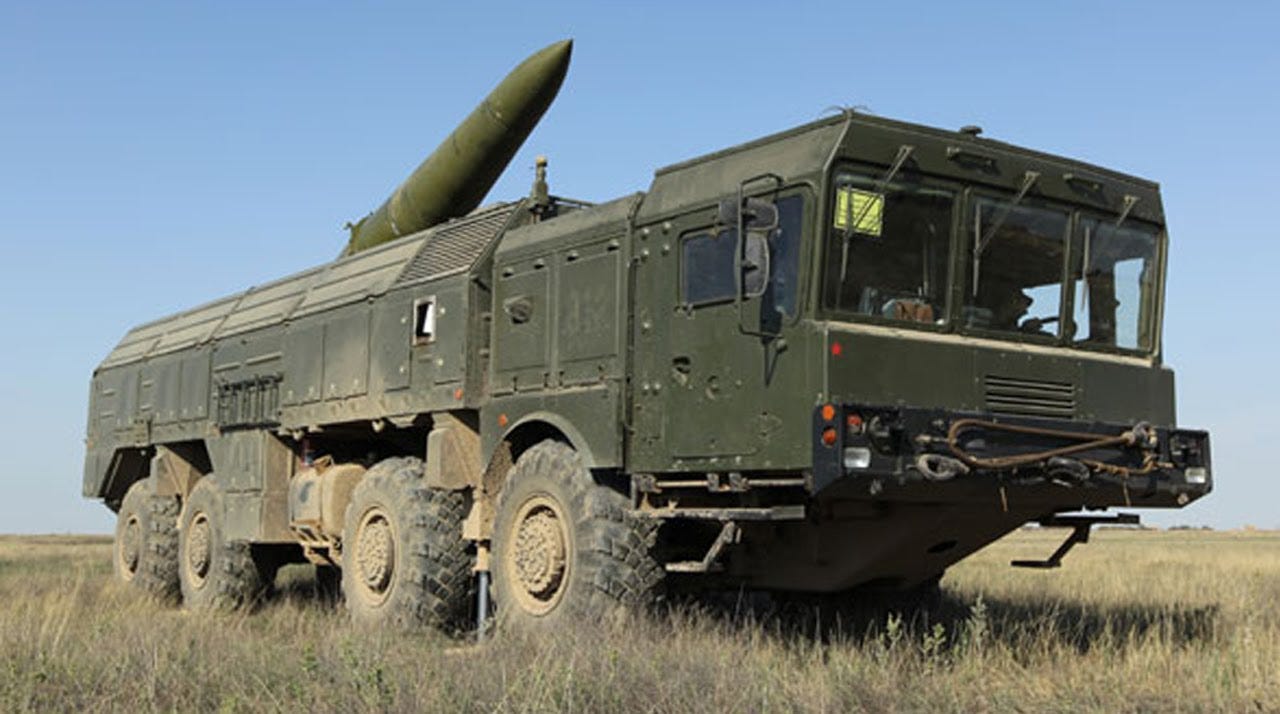
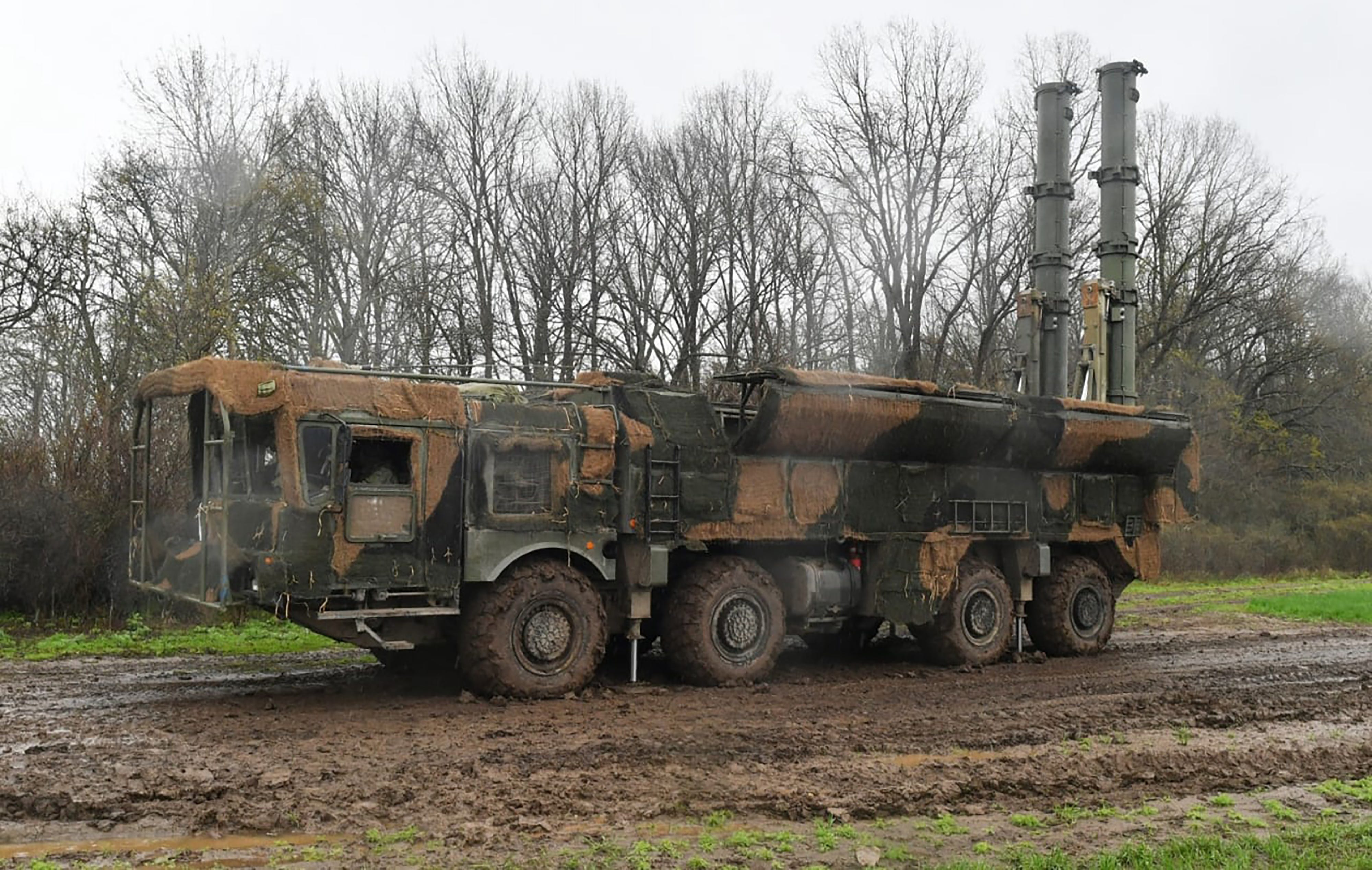
Launcher Vehicle: A self-propelled launcher mounted on an 8x8 MZKT-7930 high-mobility chassis. It carries two missiles and is capable of launching them in rapid succession, with an interval of one minute between launches.
发射车:采用 8×8 轮式 MZKT-7930 高机动底盘的自走式发射装置,可搭载两枚导弹并实现快速连续发射,两次发射间隔时间仅需一分钟。
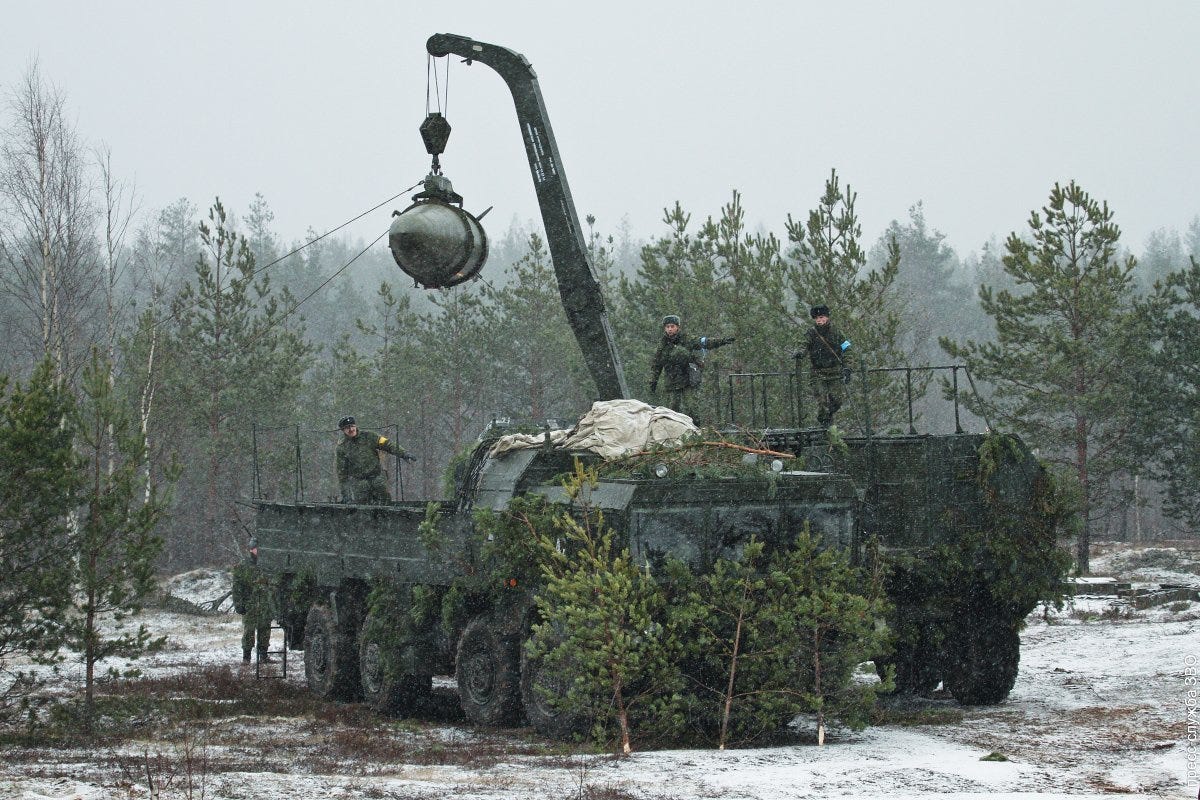
Transport and Loading Vehicle: Also based on the same chassis, this vehicle is equipped with a boom crane and is used to transport and load two missiles onto the launcher.
运输装填车:同样基于相同底盘设计,该车辆配备吊臂起重机,用于将两枚导弹运输并装载至发射装置上。
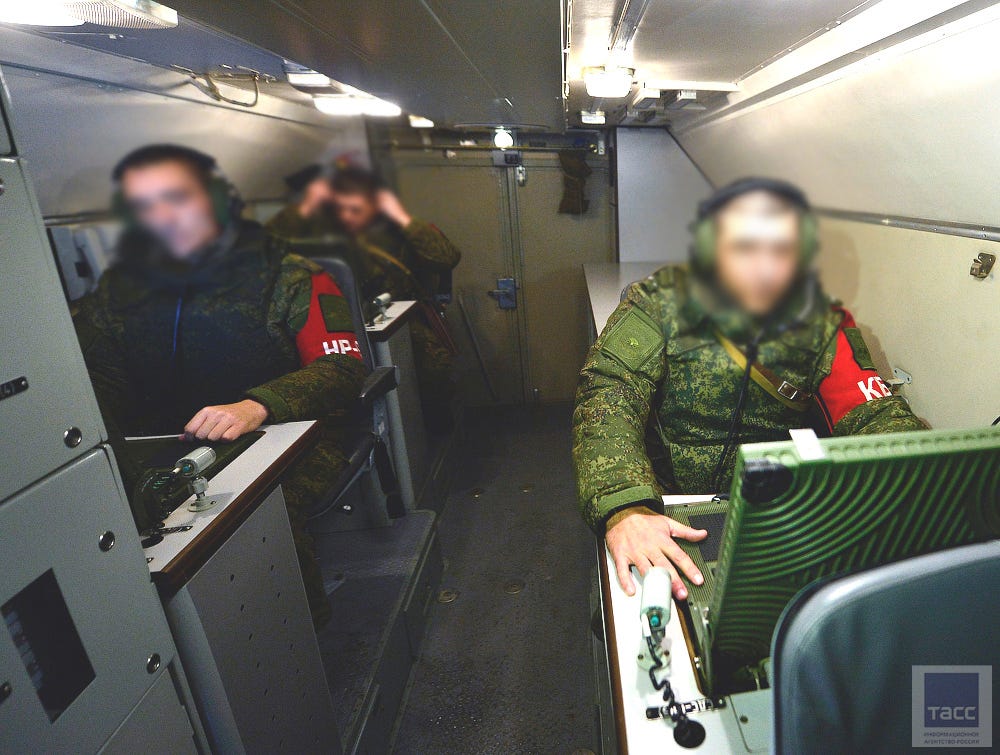
Information Preparation Point: This vehicle receives target imagery from aerial or satellite sources. It processes the data to calculate flight missions and generate reference images of the target.
信息准备点:该车辆接收来自空中或卫星的目标图像数据,通过处理计算飞行任务并生成目标参考图像。Command and Staff Vehicle: Launch data is transmitted via radio from the information preparation point to this vehicle and then forwarded to the launchers. The command to fire the missile originates from this vehicle or from a higher-level control center.
指挥参谋车:发射数据通过无线电从信息准备点传输至该车辆,随后转发至各发射装置。导弹发射指令由此车辆或上级控制中心下达。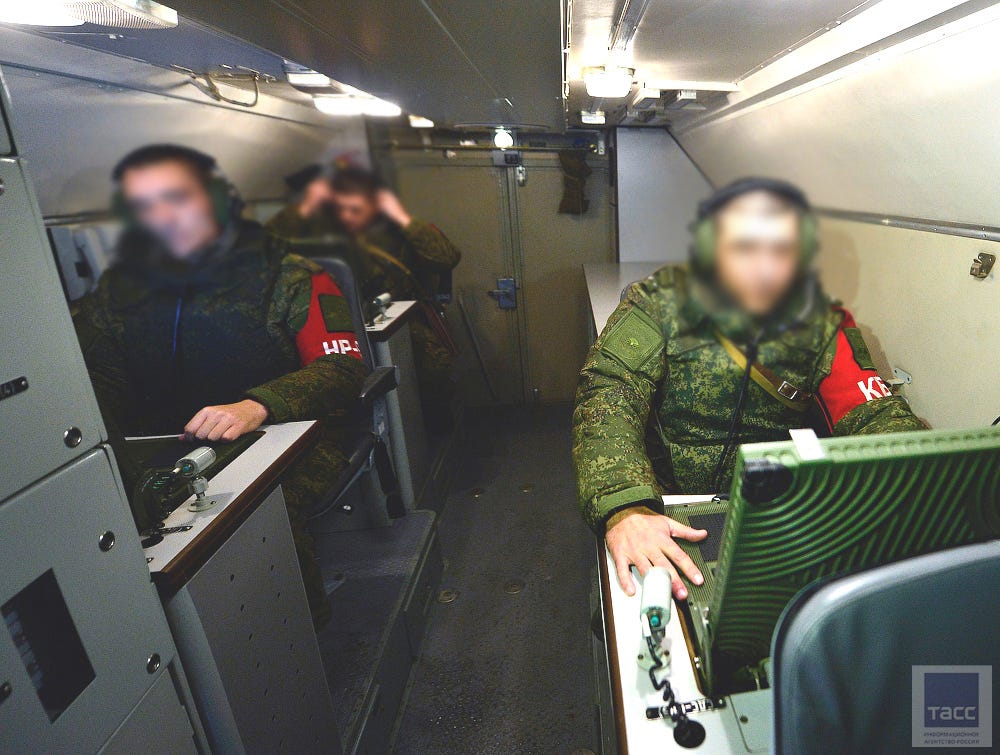
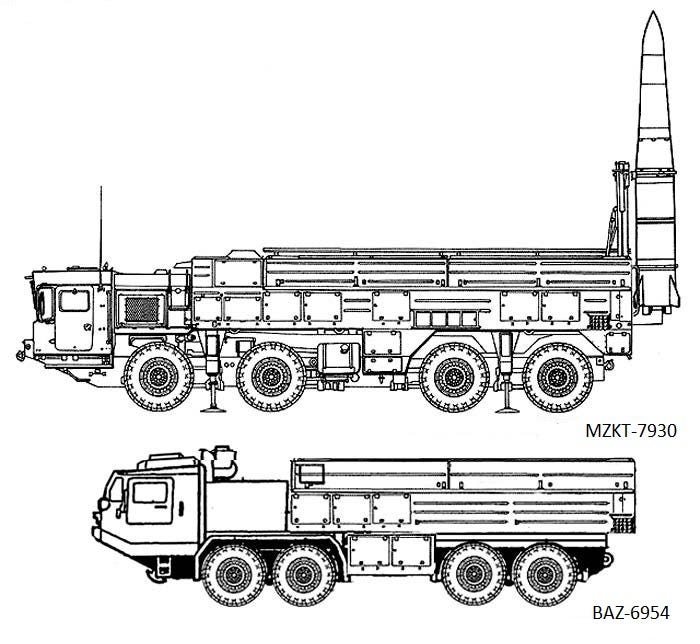
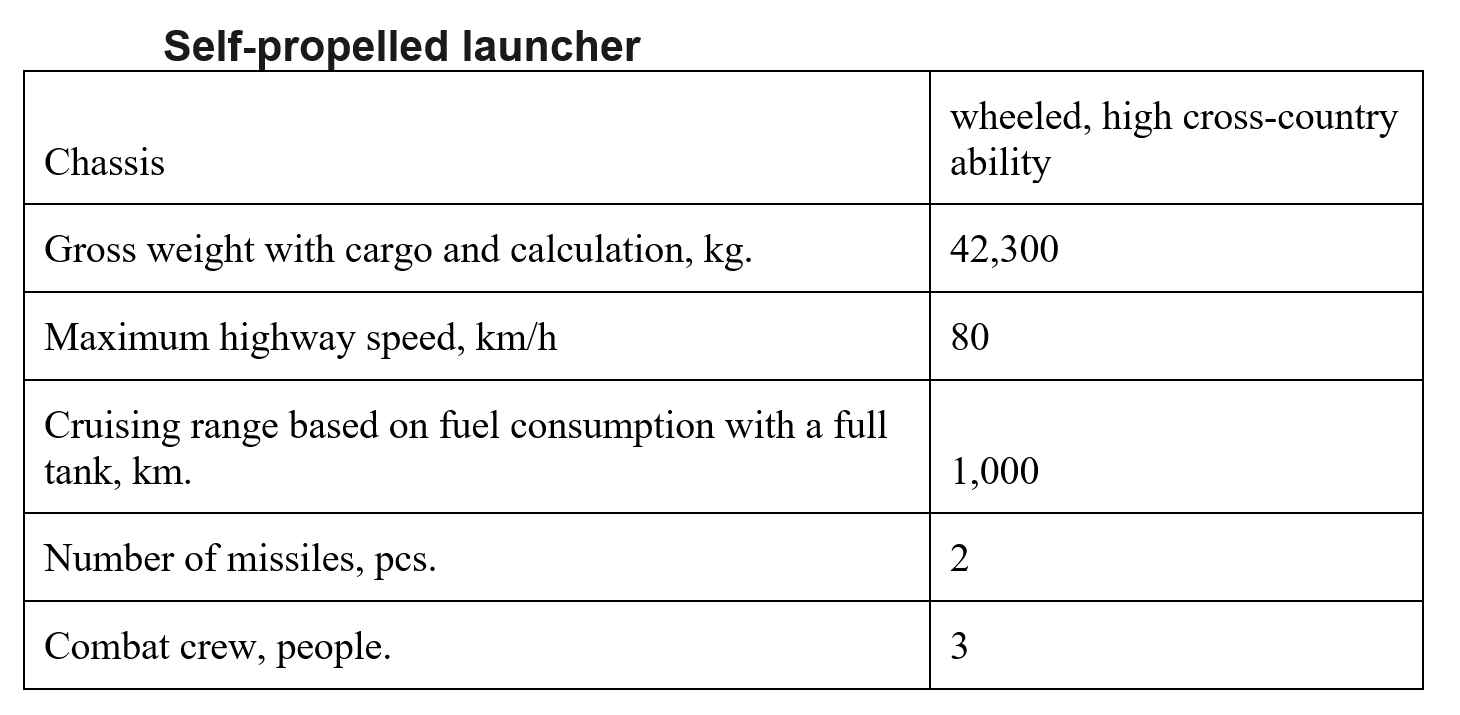
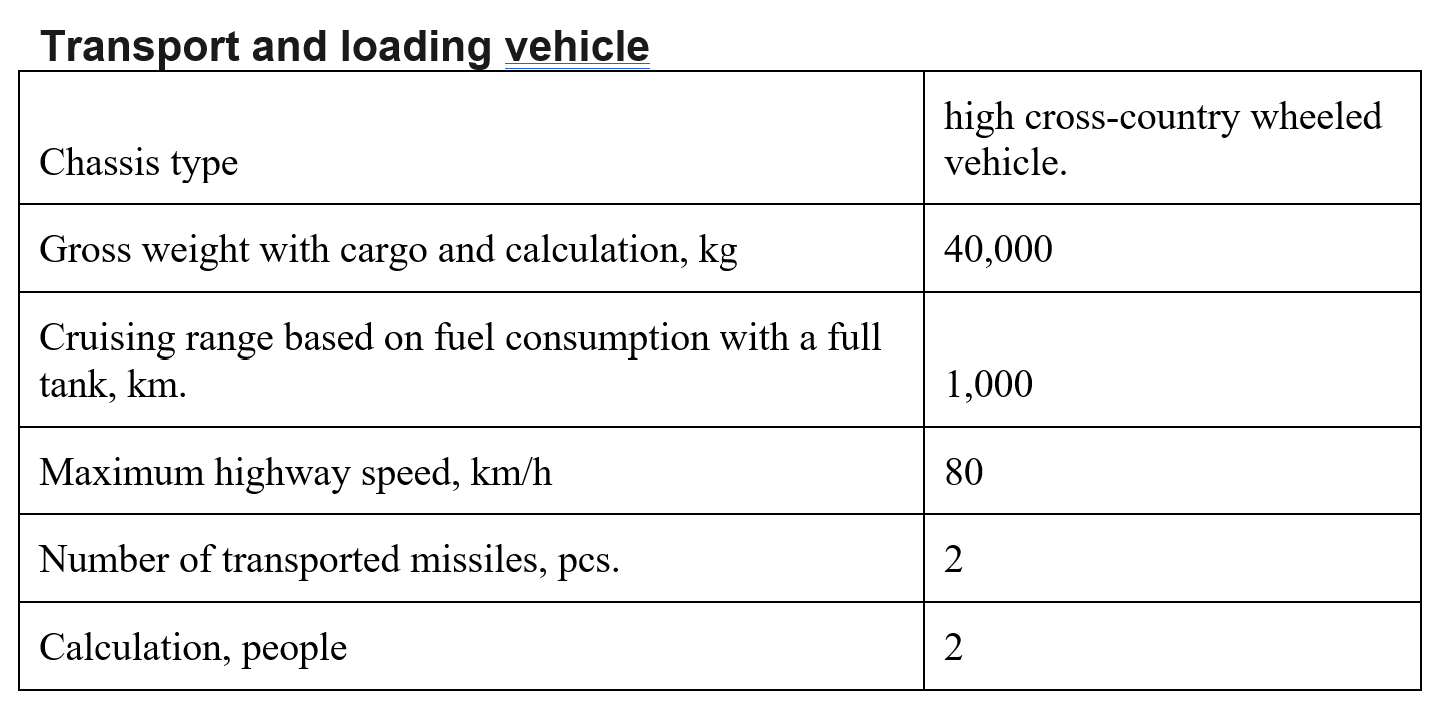

High levels of automation significantly reduce preparation time and enhance launch reliability.
高度自动化显著缩短了准备时间并提升了发射可靠性。
A missile can be launched just 16 minutes after halting from a march. The crew of the self-propelled launcher can initiate the launch from any location, without leaving the vehicle and without requiring engineering site preparation, or topographic and meteorological support. The launcher autonomously determines its own coordinates.
导弹在停止行军后仅需 16 分钟即可发射。自行发射车的乘员可在任意地点启动发射程序,无需离开车辆,也无需进行工程场地准备或地形气象支援。发射车可自主确定自身坐标。
In addition to the vehicles previously described, the Iskander missile complex also includes:
除前文所述的载具外,"伊斯坎德尔"导弹系统还包括:
Automated Control and Testing Vehicle – Used for monitoring all missile systems and diagnosing malfunctions, with precise identification of faulty components.
自动化控制与测试车——用于监控所有导弹系统并诊断故障,能精确识别故障组件。Maintenance Vehicle – Provides routine maintenance for the launcher systems, along with inspection and repair of onboard equipment and subsystems.
维护保障车——为发射系统提供日常维护,同时检查并维修车载设备及子系统。Life Support Vehicle – Supports combat crews (up to eight personnel) by offering accommodations for rest, food, and essential living needs during extended operations.
生活保障车——为作战人员(最多八人)提供支持,在长期行动期间提供休息、饮食等基本生活保障。
Missile and Complex Variants
导弹及其复合变体
The Iskander missile system was developed by the Kolomna-based Machine-Building Design Bureau (KBM), which continues to refine and expand its capabilities. Over time, the Iskander has evolved into a family of variants, primarily distinguished by modifications to the missile itself, which aim to enhance the system’s operational performance.
"伊斯坎德尔"导弹系统由科洛姆纳机械制造设计局(KBM)研发,该机构持续完善并扩展其性能。随着时间推移,"伊斯坎德尔"已发展出系列变体,主要通过导弹本体的改进来区分,这些改进旨在提升系统的作战效能。
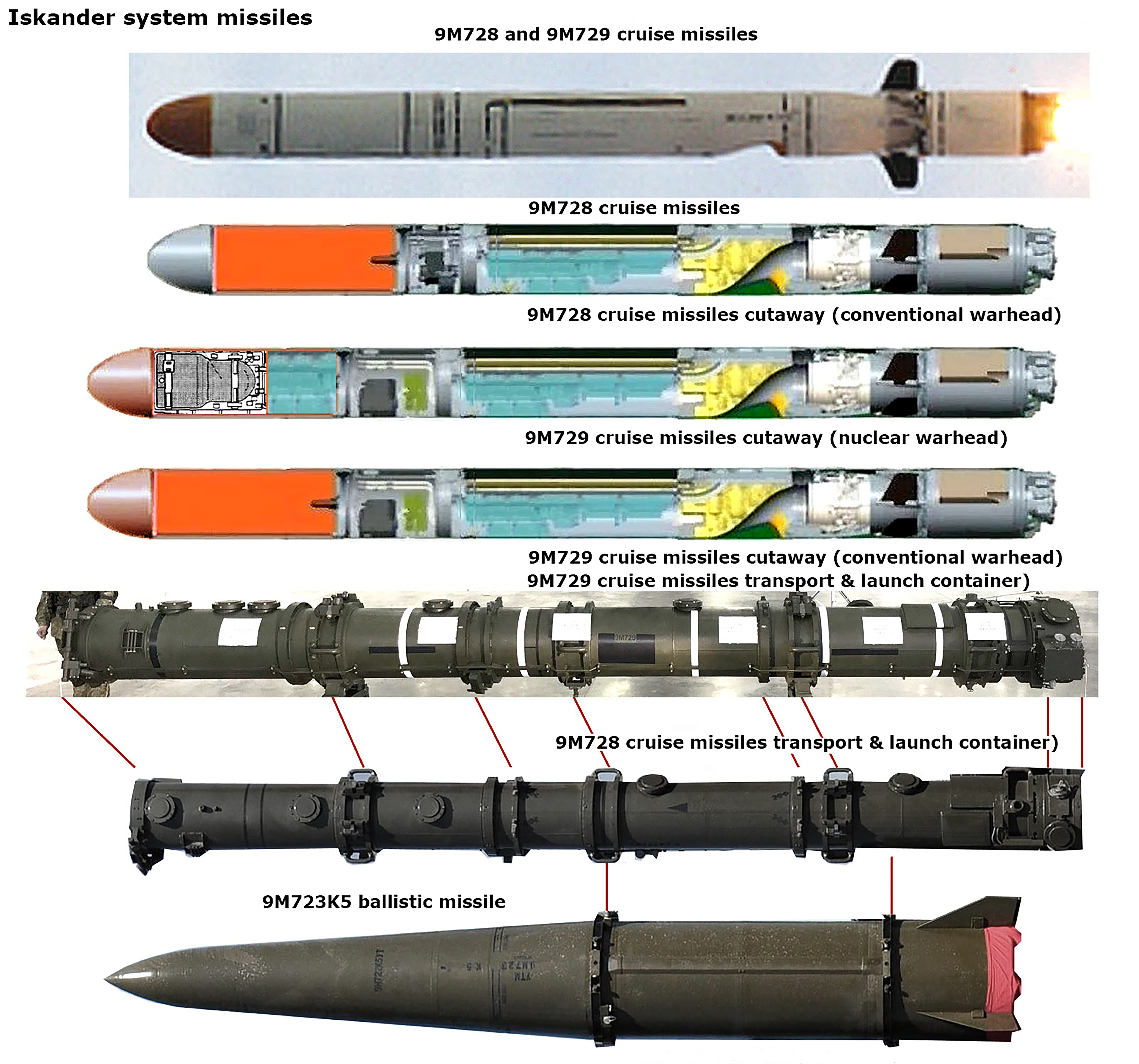
Iskander-M 伊斯坎德尔-M
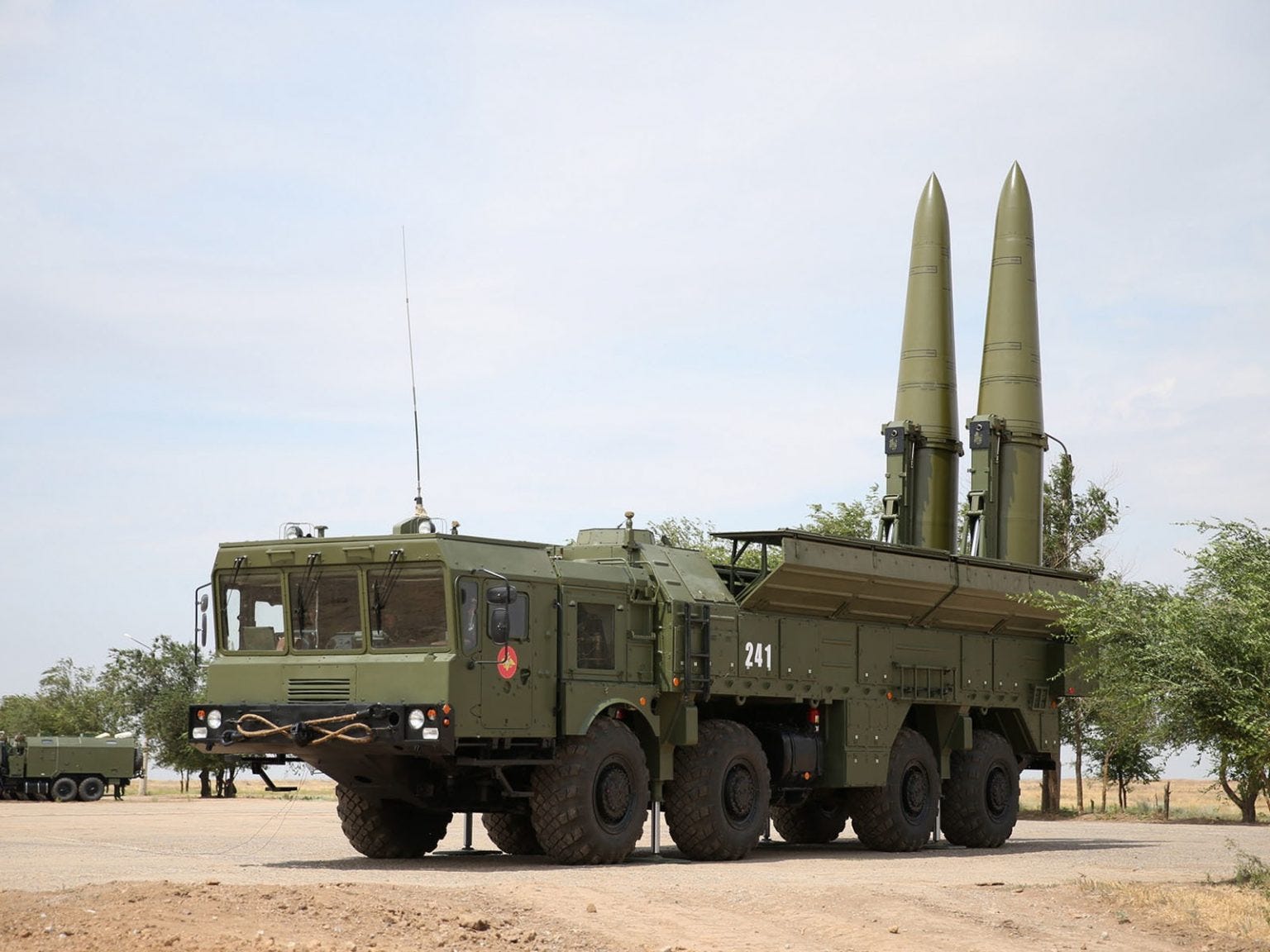
This variant features an upgraded aeroballistic missile with an extended range of over 450 kilometers. As of 2019, the rearmament of Russian forces with the Iskander-M was reportedly completed.
该型号配备了升级版空射弹道导弹,射程延伸至 450 公里以上。据报道,截至 2019 年,俄军换装"伊斯坎德尔-M"导弹系统的工作已全面完成。
Iskander-K 伊斯坎德尔-K
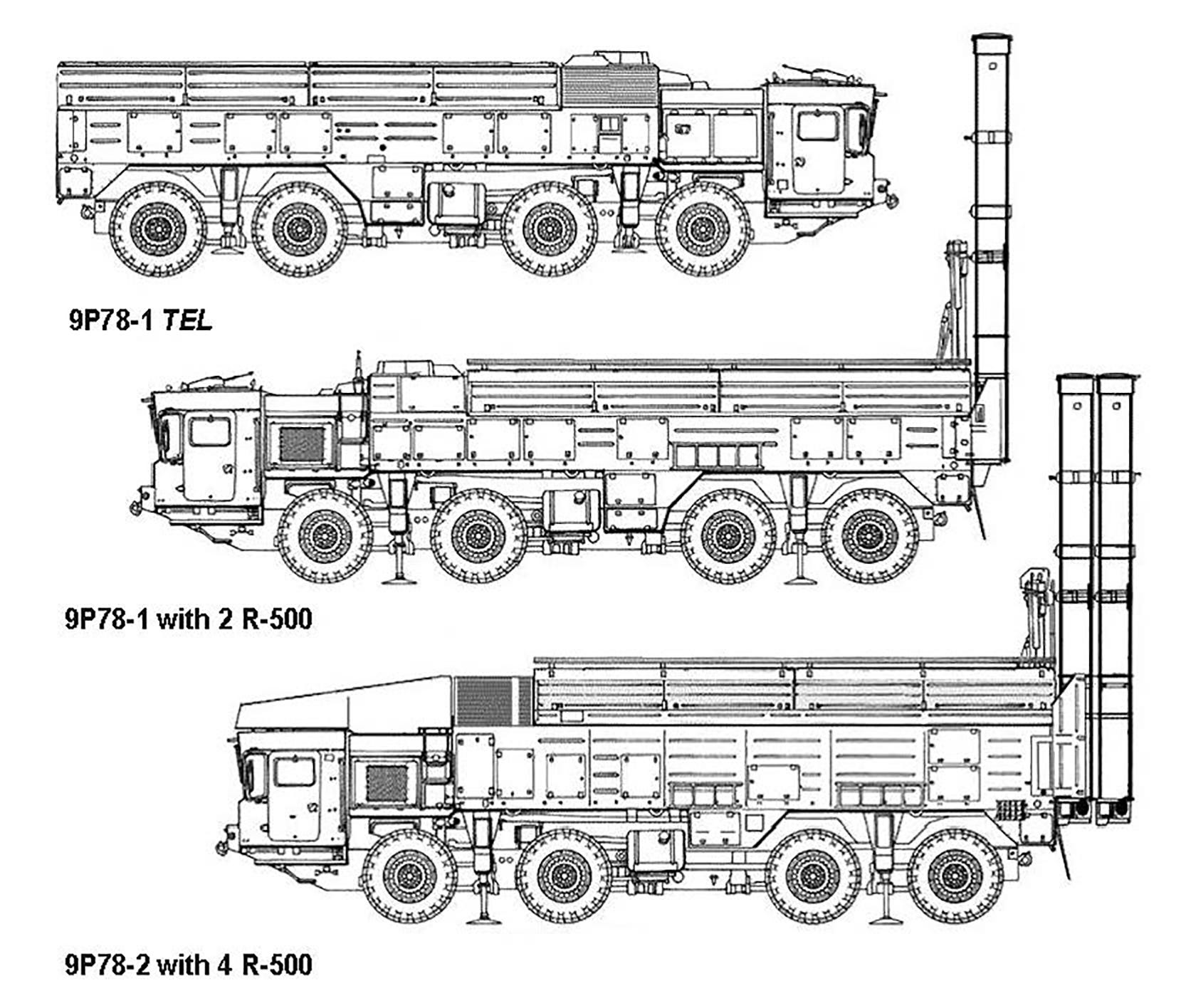
In contrast to the aeroballistic missile used in the M variant, the Iskander-K employs the 9M728 cruise missile, also known as the R-500. It has an official range of up to 500 kilometers. However, many sources suggest this range is deliberately understated to comply with international arms control treaties. Estimates of the missile’s actual range vary, with some suggesting it may reach 2,000 to 2,500 kilometers.
与 M 型使用的航空弹道导弹不同,"伊斯坎德尔-K"配备的是 9M728 巡航导弹(又称 R-500)。其官方宣称射程可达 500 公里,但多方消息指出这一数据为遵守国际军控条约而刻意低报。对该导弹实际射程的评估存在分歧,有分析认为其最大射程可能达到 2000 至 2500 公里。
A modernized version of the cruise missile was later introduced under the designation 9M729.
随后以 9M729 为代号推出了这款巡航导弹的现代化版本。
To fully assess the capabilities of this cruise missile, it should be evaluated in comparison with other modern cruise missile systems. Its subsonic speed enables a low-altitude flight profile during the terminal approach, which enhances its ability to evade radar detection. Furthermore, the missile is equipped with an optical homing head utilizing the correlation-extreme guidance method—a technique that compares real-time imagery with preloaded reference images, resulting in high targeting accuracy.
要全面评估这款巡航导弹的性能,需将其与其他现代巡航导弹系统进行对比。该导弹采用亚音速飞行,在末段攻击阶段可实现低空突防,显著增强其雷达规避能力。此外,导弹配备的光学导引头采用景象匹配制导技术——通过将实时图像与预存基准图进行比对,从而实现高精度打击。
The integration of this cruise missile into the Iskander system significantly enhances its operational versatility, enabling the engagement of a broader range of targets with improved precision and effectiveness.
这款巡航导弹与"伊斯坎德尔"系统的整合显著提升了其作战灵活性,使其能够以更高的精度和效能打击更广泛的目标范围。
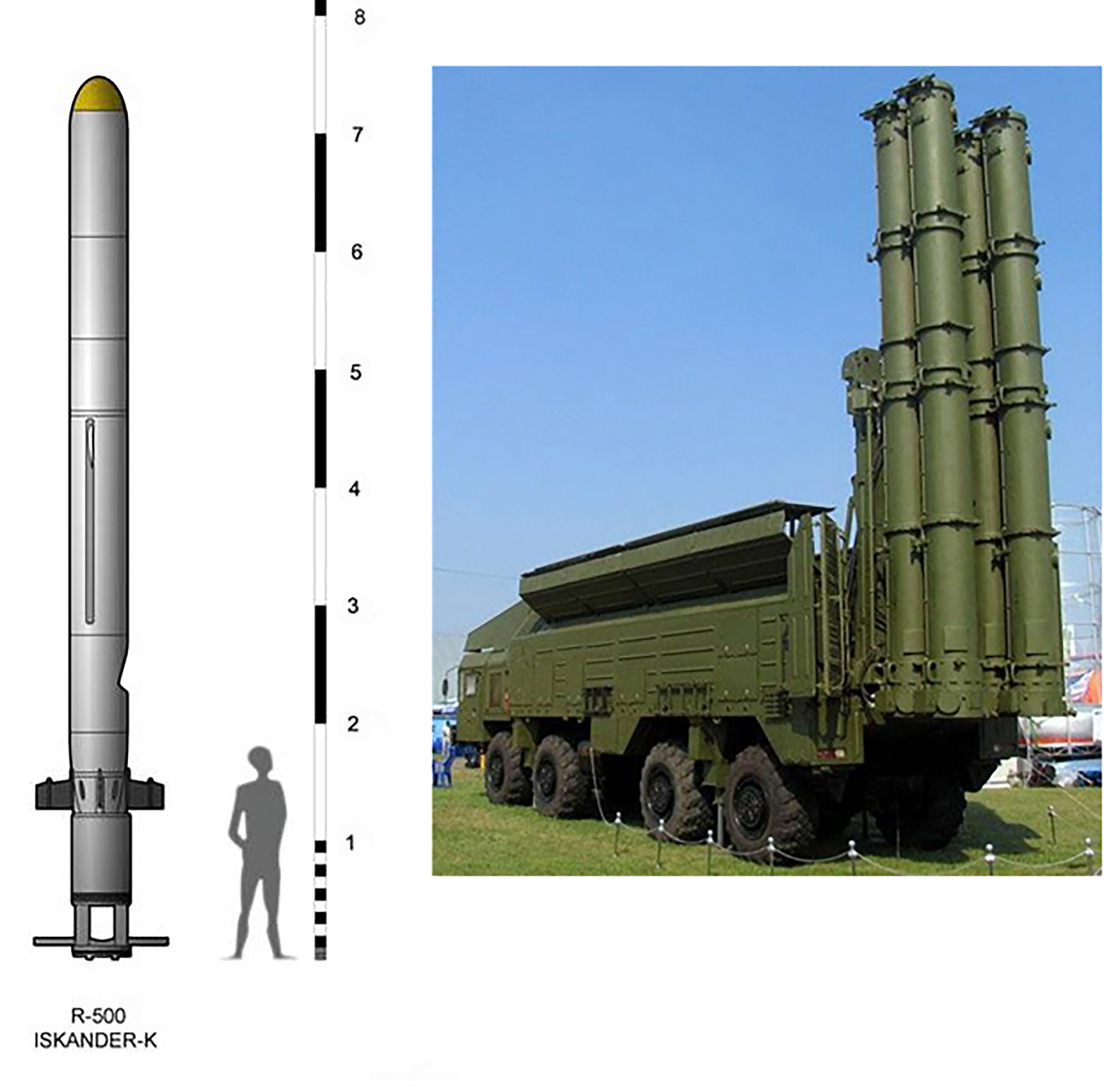
A 9P78-1 self-propelled launcher equipped with R-500 cruise missiles forms part of the 9K720 "Iskander-K" missile system.
一辆配备 R-500 巡航导弹的 9P78-1 自行发射车,构成 9K720"伊斯坎德尔-K"导弹系统的一部分。
Iskander-E 伊斯坎德尔-E
To facilitate the export of the Iskander system to foreign partners, a simplified version known as Iskander-E was developed. This export model features a reduced range of 280 kilometers and omits certain combat payloads, such as cluster munitions. The range limitation ensures compliance with international arms control treaties, which prohibit the export of missiles capable of exceeding 300 kilometers.
为便于向外国合作伙伴出口"伊斯坎德尔"系统,俄罗斯开发了简化版本"伊斯坎德尔-E"。这款出口型号射程缩减至 280 公里,并取消了集束弹药等部分战斗载荷。射程限制确保了符合国际军控条约规定——该条约禁止出口射程超过 300 公里的导弹。
As of now, Armenia, Belarus (465th Missile Brigade), and Algeria (4 regiments) are the only confirmed foreign operators of the Iskander-E system, having acquired between four and eight units.regiments
截至目前,亚美尼亚、白俄罗斯(第 465 导弹旅)和阿尔及利亚(4 个团)是仅有的已确认引进"伊斯坎德尔-E"导弹系统的海外用户,采购数量在四至八个发射单位之间。
While the Iskander remains in active operational service, many of its precise specifications and design features remain classified. As a result, most publicly available technical data are estimates and often the subject of ongoing debate. Variations and discrepancies in reported figures are expected, given the need to maintain military confidentiality.
尽管"伊斯坎德尔"导弹仍在现役服役,其许多精确参数和设计细节仍属机密。因此,大多数公开的技术数据均为估算值,并常常成为持续争论的话题。考虑到军事保密的需要,报道数据存在差异和出入实属正常。
Nonetheless, the system’s core operational principles, flight logic, and trajectory optimization strategies are generally understood and continue to draw significant interest. Widely recognized as one of the most advanced tactical missile systems in service today, the Iskander continues to undergo active development and modernization, further enhancing its capabilities.
尽管如此,该系统的核心操作原理、飞行逻辑及弹道优化策略已基本被掌握,并持续引发高度关注。作为当今公认最先进的现役战术导弹系统之一,"伊斯坎德尔"仍在积极进行研发升级,其作战能力正不断提升。
[i] Edited by Piquet (EditPiquet@gmail.com)
[i] 由皮奎特编辑(EditPiquet@gmail.com)
References 参考文献
Mike Mihajlovic: Rockets and Missiles Over Ukraine: The Changing Face of Battle
迈克·米哈伊洛维奇:《乌克兰上空的火箭与导弹:战场面貌之变》Олег Мамалыга, Дорога к Искандеру-М
奥列格·马马雷加,《伊斯坎德尔-M 导弹之路》Н. Цыгикало, Сказание об Искандере
《伊斯坎德尔传奇》——Н. 齐吉卡洛https://thaimilitaryandasianregion.blogspot.com/2017/06/iskander-tactical-ballistic-missile.html
If you like the article (and many more articles regarding military subjects are coming), you can buy me a coffee:
如果你喜欢这篇文章(未来还将推出更多军事主题文章),可以请我喝杯咖啡:
https://www.buymeacoffee.com/mmihajloviW


Great read dude. Really tho. 👏🏼 💯
好文,兄弟。真心不错。👏🏼 💯
Very good write up! Thank you
写得非常好!感谢