

“Moon River” – Extended Chord Voicings
《“Moon River” 延展和弦指法》
Welcome to the 4th lesson in our beginner jazz piano series on the tune “Moon River”. In this lesson we focus on moving beyond basic R-3-5-7 chord voicings. We touch upon extended chord theory by adding the 9th into our chord voicings for Cmaj7, Fmaj7, and A-7.
欢迎来到我们初学者爵士钢琴系列的第四课,主题是曲目“Moon River”。本课我们重点讲解如何超越基础的根音-三度-五度-七度和弦指法。我们通过在 Cmaj7、Fmaj7 和 A-7 和弦中加入九度音,初步介绍延展和弦理论。
Left Hand 10th Intervals
左手十度音程
We take the basic triads for the chords C major, A minor, and F major, and separate the 3 notes over a 10th interval to create a left-hand accompaniment pattern which is well-suited to solo jazz piano performance.
我们将 C 大调、A 小调和 F 大调的基础三和弦,将三个音分开成十度音程,创造出适合独奏爵士钢琴演奏的左手伴奏模式。
Left hand 10th intervals can be played simultaneously or if you have smaller hands they can also be played in a ‘rolling’ or ‘rocking’ motion as demonstrated in the lesson. Left hand 10th voicings create a strong harmonic foundation and add depth to our left hand accompaniment.
左手的十度音程可以同时弹奏,或者如果你的手较小,也可以像课程中演示的那样以“滚动”或“摇摆”的方式弹奏。左手的十度和弦排列创造了强有力的和声基础,并为我们的左手伴奏增添了深度。
Basic Voicings To Extended Voicings
从基础和弦到扩展和弦
Remember that it’s a gradual process to transition from basic R-3-5-7 chords to incorporating the extensions 9, 11, and 13. Check out our chord extensions course for detailed tutorials on this important area of beginner jazz theory studies.
请记住,从基础的根音-三度-五度-七度和弦逐渐过渡到加入 9、11 和 13 扩展音是一个渐进的过程。查看我们的和弦扩展课程,获取关于这一初学者爵士理论重要领域的详细教程。
Mastering extended chord voicings is gradual process and playing lots of jazz standards is key to memorising the voicing shapes. Start by emulating the demonstrations and when you’re ready, move onto our next lesson where we apply the same techniques to the second half of the tune.
掌握扩展和弦排列是一个渐进的过程,多弹奏爵士标准曲目是记忆和弦形状的关键。先模仿示范,当你准备好后,继续学习我们的下一课,在那里我们将把相同的技巧应用到曲子的后半部分。
Lesson Downloads 课程下载
-
 “Moon River” Chord Changes
《Moon River》和弦变化 File Type: pdf 文件类型:PDF
Related Lessons 相关课程
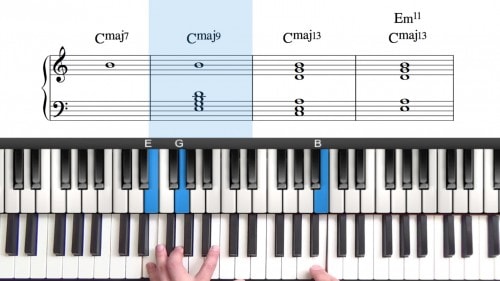
We explore the voicing options for major chords under each note of the Lydian Mode which is a common scale to play ov...
我们探讨了在利底亚音阶每个音符下的大调和弦的配音选项,利底亚音阶是一种常用的演奏音阶...
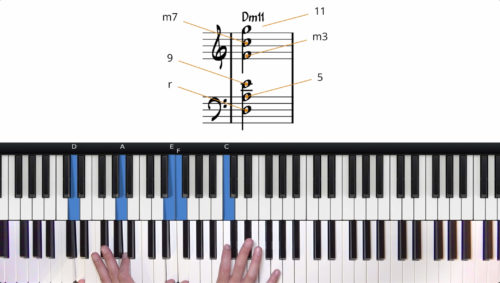
The Kenny Barron voicing is an minor 11th chord voicing built from 5th intervals. The voicing is names after acclaime...
肯尼·巴伦配音是一种由五度音程构成的小十一和弦配音。该配音以著名的...命名
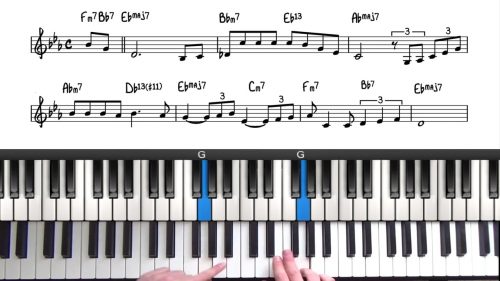
Extended chords create a richer and more complex sound than triads and 7th chords and are used to create more interes...
扩展和弦比三和弦和七和弦创造出更丰富、更复杂的声音,用于营造更有趣的音乐效果……
Practice Tips 练习技巧
-
Focus on the feel and the sound of extended chord voicings. The first step to learning extended chords is to familiarise yourself with the hand shapes and how these voicings sound compared to basic R-3-5-7 voicings.
专注于扩展和弦的感觉和声音。学习扩展和弦的第一步是熟悉手型,以及这些和弦与基本的根音-三度-五度-七度和弦的声音对比。 -
If large stretches are challenging, 'roll' or arpeggiate the notes in your left hand whilst using the sustain pedal. If you are new to playing 10th intervals, it can take a little time to become comfortable with this technique. Practice slowly and accurately to build up the strength and dexterity.
如果大跨度按法有困难,可以在左手“滚奏”或琶音这些音符,同时使用延音踏板。如果你刚开始练习十度音程,可能需要一些时间来适应这种技巧。请慢速且准确地练习,以增强力量和灵活性。 -
Isolate challenging sections - such as the final 3 bars of the B section - and practice slowly. Remember that if we can't play something slowly, we can't play it fast either! "The wise musician practices slowly, the wiser musician practices even slower."
将具有挑战性的部分单独练习——比如 B 段的最后 3 小节——并且慢速练习。记住,如果我们不能慢速演奏某段内容,也无法快速演奏!“聪明的音乐家慢速练习,更聪明的音乐家则更慢速练习。” -
Isolate the left hand 10th intervals and practice this movement separately from the melody. Once you are more comfortable with the movement, add the right hand chord tones and melody note.
将左手的 10 度音程单独分离出来练习,与旋律分开。一旦你对这个动作更熟悉了,再加入右手的和弦音和旋律音。
