





- Burnout Issues in Policing and the Need for Police Psychology
警務工作中倦怠的問題以及對警察心理學的需求 - Police Psychology & DBT Skill Development
警察心理學與辯證行為療法技巧發展 - Mindfulness: A Foundational DBT Skill in the Police Psychology Context
了了分明:警察心理學背景下的一項基礎辯證行為療法技巧 - DBT Emotion Regulation Skills for Police Psychology
辯證行為療法情緒調節技巧在警察心理學中的應用 - Police Psychology and DBT Interpersonal Effectiveness Skills
警察心理學與辯證行為療法人際效能技巧 - Conclusion 結論
- Additional Resources 額外資源
Burnout Issues in Policing and the Need for Police Psychology
警務工作中倦怠的問題以及對警察心理學的需求
Burnout can happen in any profession, but for police officers, the risks and consequences are particularly acute. Persistent stressors, such as peer-to-peer conflicts, inadequate organizational support, and long work hours can gradually wear down officers’ enthusiasm for the job. Furthermore, officers can be exposed to danger and traumatic events in their line of work, which can lead to secondary trauma and compassion fatigue.
倦怠可能發生在任何職業中,但對於警務人員來說,其風險和後果尤其嚴重。持續的壓力源,如同儕間的衝突、組織支持不足以及長時間的工作,會逐漸消磨警務人員對工作的熱情。此外,警務人員在其工作過程中可能會接觸到危險和創傷事件,這可能導致二度創傷和慈悲疲勞。
These accumulated stressors can lead to depression, anxiety, and coping strategies including emotion suppression and substance abuse. Police psychology can have a critical role, both in addressing these maladies once they appear, and providing preventative counseling. DBT skills provide a path to resilient mental health, and a clinically backed playbook for handling the difficult issues that arise in police psychology.
這些累積的壓力源可能導致憂鬱症、焦慮症,以及包括情緒壓抑和藥物濫用等應對策略。警務心理學可以在解決這些問題出現後,以及提供預防性諮詢方面,發揮關鍵作用。辯證行為療法技巧為恢復心理健康提供了一條途徑,並為處理警務心理學中出現的棘手問題提供了一套有臨床依據的策略。
The High Cost of Officer Burnout
警官倦怠的高昂代價
Police burnout has a weighty impact on individual officers and society at large. Studies have found that it corresponds to negative indicators on officers’ physical and mental health, leading to higher rates of work absence and turnover. Stressed officers have high rates of PTSD, marriage difficulty, sleep problems, and a host of other maladies.
警務人員的倦怠對個別警官和整個社會都有重大的影響。研究發現,它與警官身心健康的負面指標相關,導致更高的曠工率和離職率。壓力大的警官有很高的創傷後壓力症候群、婚姻困難、睡眠問題和許多其他疾病的發生率。
These issues inevitably spill over into the quality of the services that officers’ provide. Burnout has been correlated with a greater likelihood of the use of force and violence among officers. Police psychology, therefore, can alleviate both personal and societal troubles by addressing them at their root.
這些問題不可避免地會蔓延到警官提供的服務品質上。倦怠與警官使用武力和暴力的可能性增加有關。因此,警務心理學可以透過從根源上解決這些問題,來減輕個人和社會的困擾。
Police Psychology & DBT Skill Development
警察心理學與 DBT 技巧發展
Fortunately, DBT can provide a path forward for practitioners of police psychology to work with officers to manage stress and maintain better mental health on and off the job. These skills provide direct benefits and can help the officer regain an overall sense of control over the challenges in their work. This crucial shift in mindset can be the difference between a steady decline in overall wellness and a fulfilling, sustainable career.
幸運的是,DBT 可以為警務心理學的從業者提供一條前進的道路,與警官合作管理壓力,並在工作期間和工作之餘保持更好的心理健康。這些技巧提供直接的好處,並可以幫助警官重新獲得對工作中挑戰的整體控制感。這種心態上的關鍵轉變可能是整體健康狀況穩定下降與充實、可持續的職業生涯之間的區別。
Mindfulness: A Foundational DBT Skill in the Police Psychology Context
了了分明:警察心理學情境中 DBT 的一項基礎技巧
Mindfulness is a core skill in DBT because it has many direct benefits of its own while also acting as a building block for more targeted, situational skills. By learning to observe their thoughts and feelings without acting on them, officers can gain better insight to the persistent stressors in their lives and be better prepared for the high stress moments that arise during their line of work.
了了分明是 DBT 中的一項核心技巧,因為它本身具有許多直接的好處,同時也是更具針對性的情境技巧的基礎。透過學習觀察自己的想法和感受而不採取行動,警官可以更深入地了解生活中持續存在的壓力源,並為工作中出現的高壓時刻做好更充分的準備。
Police psychology practitioners can teach mindfulness to address certain well-known physiological issues that officers experience on the job, including:
警察心理學從業人員可以教授了了分明,以解決警官在工作中遇到的一些眾所周知的生理問題,包括:
- Adrenaline Spikes: In responding to emergencies, officers regularly experience sudden rushes of adrenaline (also referred to as epinephrine) as they go into “fight or flight” mode. While this is a natural response to these situations, repeated adrenaline spikes can lead to anxiety, jitteriness, and sleep problems.
腎上腺素激增:在應對緊急情況時,警官經常會經歷腎上腺素(也稱為腎上腺素)的突然激增,因為他們會進入「戰鬥或逃跑」模組。雖然這是對這些情況的自然反應,但重複的腎上腺素激增可能導致焦慮、緊張和睡眠問題。 - Tunnel Vision: In intense situations, officers can develop tunnel vision, in which they become fully focused on a single person, target, or situation. This loss of situational awareness can be dangerous in the short term, as the officer might miss other threats. It can also erode social trust in officers if they are not making good decisions in high impact situations.
隧道視野:在緊張的情況下,警員可能會產生隧道視野,他們會完全專注於單一個人、目標或情況。這種對情境意識的喪失在短期內可能很危險,因為警員可能會錯過其他威脅。如果警員在影響重大的情況下沒有做出好的決定,也可能損害社會對警員的信任。 - Auditory Exclusion: Auditory exclusion is essentially tunnel vision for hearing. Officers in the midst of an adrenaline spike can block out certain sounds or otherwise have difficulty processing what they’re hearing outside of a narrow area of focus. This increases risks for the officer and those they are assisting in the same ways as tunnel vision.
聽覺排除:聽覺排除本質上是聽覺的隧道視野。腎上腺素激增的警官可能會屏蔽某些聲音,或難以處理狹窄焦點區域之外聽到的聲音。這會以與隧道視野相同的方式,增加警官和他們協助對象的風險。
了了分明可以幫助警官在經歷緊張事件後冷靜下來,並創造更放鬆的基礎狀態,從而緩解這些問題。透過練習了了分明,警官能更好地避免這些狀態,並且在發生時更能辨識出來。
DBT Emotion Regulation Skills for Police Psychology
DBT 情緒調節技巧於警察心理學之應用
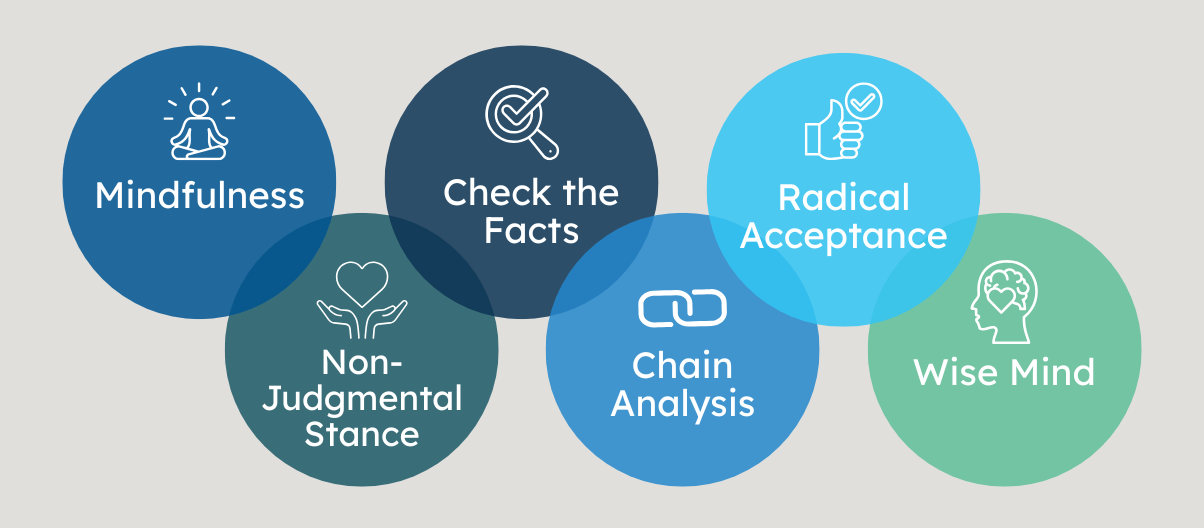
While emotion suppression may seem like the only option for officers exposed to traumatic situations, police psychology can leverage DBT for another path. DBT teaches that we should accept, observe, and understand our emotions. Officers can learn to identify what triggers emotional intensity, which interpretations might be heightening their reaction, and how to shift out of reactive cycles using tools like opposite action or checking the facts. This internal clarity not only supports better decision-making but also protects against long-term psychological wear.
雖然對於暴露於創傷情境的警官來說,壓抑情緒似乎是唯一的選擇,但警察心理學可以利用 DBT 來開闢另一條道路。DBT 教導我們應該接受、觀察和理解自己的情緒。警官可以學習辨識是什麼觸發了情緒強度、哪些詮釋可能會加劇他們的反應,以及如何使用諸如相反行動或查核事實等工具來擺脫反應性循環。這種內在的清晰度不僅有助於做出更好的決策,還可以防止長期的心理損耗。
- Identifying and Labeling Emotions: Understanding a feeling is the first step to regulating it. This skill involves increasing emotional awareness, distinguishing between similar emotions (e.g., frustration vs. rage), and labeling them accurately. For officers, being able to name emotions in the moment can help interrupt impulsive reactions and support more deliberate decision-making under pressure.
識別和標記情緒:理解一種感覺是調節它的第一步。這項技巧包括提高情緒意識、區分相似的情緒(例如,沮喪與憤怒),並準確地標記它們。對於警官來說,能夠在當下說出情緒的名稱,有助於中斷衝動的反應,並在壓力下支持更慎重的決策。 - Check the Facts: This skill teaches individuals to evaluate whether their emotional response fits the actual situation. By examining the evidence, officers can determine if their reaction is justified or being amplified by assumptions, misinterpretations, or past trauma.
核對事實:這個技巧教導個人評估他們的情緒反應是否符合實際情況。透過檢視證據,警官可以判斷他們的情緒反應是否合理,或者是否被假設、誤解或過去的創傷所放大。 - Build Positive Experiences: This involves intentionally seeking out activities that bring enjoyment, mastery, or meaning into daily life. For law enforcement officers, who often see incredibly troubling and traumatic events, scheduling positive experiences helps counter emotional burnout and reinforces psychological balance.
建立正向經驗:這包括有意識地尋找能為日常生活帶來樂趣、自我掌控感或意義的活動。對於經常目睹令人難以置信的困擾和創傷事件的執法人員來說,安排正向經驗有助於對抗情緒耗竭並加強心理平衡。
Police Psychology and DBT Interpersonal Effectiveness Skills
警務心理學與 DBT 人際效能技巧
DBT uses a variety of skills to navigate interactions, many of which can help clients in police psychology.
DBT 使用各種技巧來應對互動,其中許多技巧可以幫助警務心理學的個案。
Objective effectiveness skills help one achieve a goal through an interaction. Police psychology can adapt DBT’s DEAR MAN protocol, which stands for Describe, Express, Assert, Reinforce, Mindful, Appear confident, Negotiate. Having this tool can help officers navigate many of the challenging situations they encounter, particularly those that are not immediately dangerous.
客觀效能技巧能幫助人們透過互動達成目標。警察心理學可以採用 DBT 的 DEAR MAN 協定,它代表描述(Describe)、表達(Express)、堅持(Assert)、強化(Reinforce)、正念(Mindful)、表現自信(Appear confident)和協商(Negotiate)。擁有這個工具可以幫助警官應對他們遇到的許多具挑戰性的情況,特別是那些不具立即危險性的情況。
Self-respect effectiveness refers to staying true to values and feeling good about how one handled themselves in a situation. This skill can be key for officers maintaining mental and emotional stability as they navigate a range of challenging interactions.
自我尊重效能是指忠於自己的價值觀,並對自己在某種情況下的處理方式感到滿意。當警官在處理各種具有挑戰性的互動時,這項技巧可能是維持心理和情緒穩定的關鍵。
Conclusion 結論
Incorporating DBT into police psychology can help make for more prepared officers with sustainable emotional patterns who better serve their communities. With the police force working to regain trust in many communities, practitioners who can guide officers toward controlled, effective, value-based patterns and interactions are valued and needed today.
將 DBT 納入警務心理學可以幫助培養更有準備的警官,他們具有可持續的情緒模式,可以更好地為社區服務。由於警察部隊正在努力重新獲得許多社區的信任,因此能夠引導警官走向可控、有效、基於價值的模式和互動的從業者在今天備受重視和需要。
Additional Resources 其他資源
Training: 訓練:
- Live: 2025 Cohort | Comprehensive Dialectical Behavioral Therapy (DBT)
直播:2025 年隊伍 | 綜合辯證行為療法 (DBT) - Introduction to Dialectical Behavioral Therapy (DBT)
辯證行為療法(DBT)簡介 - ABPPSP: Introduction to Police & Public Safety Psychology
ABPPSP:警察與公共安全心理學概論 - ABPPSP: The Specialty of Police and Public Safety Psychology (Free)
ABPPSP:警察與公共安全心理學專業(免費)
Blog Posts: 部落格文章:
- What is Police Psychology and Is It a Career For You?
什麼是警察心理學?它適合你嗎? - Confessions and Police Interrogations
自白與警察審訊 - What is DBT & How Does it Work?
什麼是 DBT?它如何運作? - Using Mindfulness in DBT to Counteract Deindividuation and Impulsivity
在 DBT 中使用了了分明來對抗去個體化和衝動
eBook: 電子書: